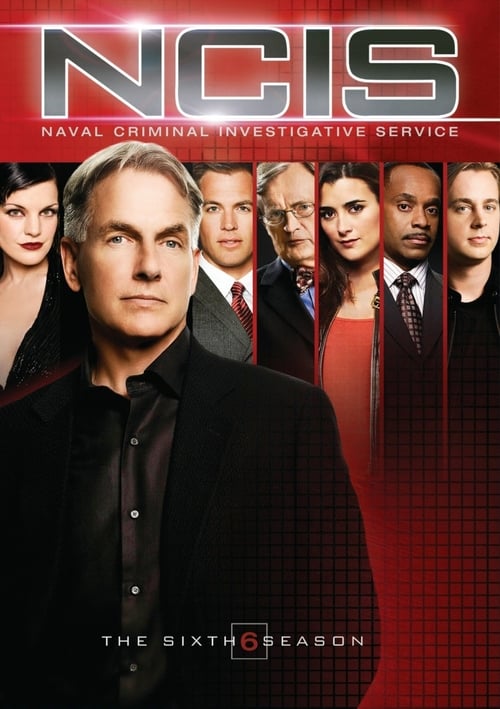
NCIS
Season 6 Analysis
Season Overview
No specific overview for this season.
Season Review
Categorical Breakdown
Characters are overwhelmingly judged by competence and loyalty to NCIS. The primary conflict involving race/ethnicity is the narrative's acknowledgment of the prejudice Ziva David faces as an Israeli/Mossad agent, which the show frames as wrong. The new NCIS Director, Leon Vance, an African-American man, is a figure of authority and competence, not a lecture on systemic oppression or white male incompetence. Race and immutable characteristics are not the driving force of the plot or character arc, which aligns with universal meritocracy.
The entire premise of the series centers on the Naval Criminal Investigative Service, a core American institution. The show consistently frames the Navy, Marine Corps, and the concept of justice as fundamentally good and necessary institutions to be protected. Military and federal service members are consistently portrayed as heroes or victims, not as symbols of a fundamentally corrupt or racist home culture.
Female characters like Ziva David and Abby Sciuto are portrayed as exceptionally skilled and essential to the team's success, a form of merit-based competence. Ziva is a world-class assassin and intelligence officer, and Abby is a forensic genius. However, male characters like Gibbs, DiNozzo, and Ducky are equally capable in their respective domains. Vance is shown as a dedicated family man. The dynamic is one of competence and complementarity, not a narrative that requires the emasculation of males or promotes anti-natalism for female empowerment.
Alternative sexualities are not centered or used as a narrative focus for the season. Brief mentions or background elements of alternative sexuality are incidental to the criminal investigation, not a means of delivering political or social lecturing on gender theory. The normative structure of male-female pairing and the traditional nuclear family is the default setting.
The show is grounded in an objective moral universe where murder is a definable, absolute evil and justice is the necessary moral response. There is no evidence of a narrative thrust that portrays traditional religion as the root of evil or features Christian characters as bigoted villains. Faith and objective moral law are implicitly upheld by the nature of the procedural format.