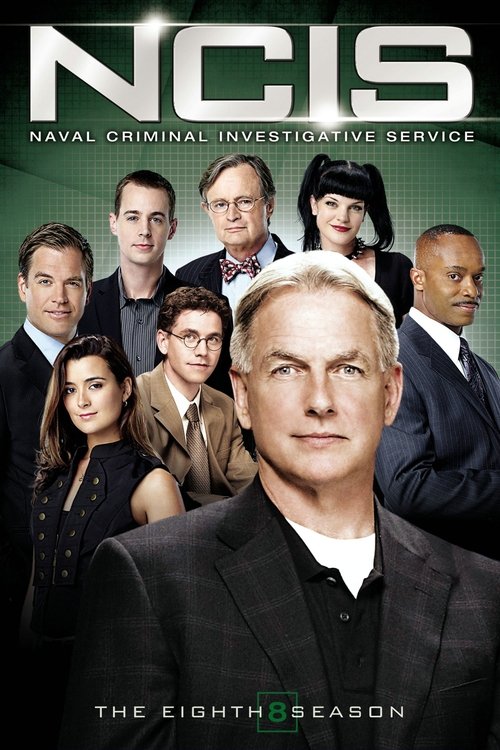
NCIS
Season 8 Analysis
Season Overview
No specific overview for this season.
Season Review
Categorical Breakdown
The team operates on a clear meritocratic structure, with Agent Gibbs, a white male, as the unquestioned leader, and Director Vance, a black male, as the head of the agency. Other agents, Ziva (Israeli female) and McGee (white male), are judged entirely by their professional competence and character, not by immutable characteristics. There is no focus on race or intersectional hierarchy to explain success or failure, nor is there any vilification of 'whiteness.'
The season contains a slight, internal critique of American institutions. The 'Port-to-Port' killer arc frames the villain as a sympathetic product of a shadowy, experimental CIA/Navy program ('Operation Frankenstein'). This suggests a corrupt or irresponsible element within the US government that 'made' the killer, which is an internal critique of the state but not a deconstruction of Western civilization as fundamentally racist or corrupt. The show's overarching theme remains the defense of the nation and its institutions.
The score is slightly elevated due to the presence of three hyper-competent, highly independent female characters: Ziva David (Mossad/NCIS Agent), Abby Sciuto (Forensic Scientist), and the introduction of Agent EJ Barrett (another female MCRT leader). Abby's character is occasionally depicted as being 'petulant' and 'disobeying orders' while remaining a brilliant, unaccountable professional, which aligns with the ‘Girl Boss’ trope’s infallibility aspect. However, the male leads are still consistently competent and highly respected, not bumbling idiots.
The narrative adheres to a normative structure. The characters' sexuality is private and traditional, and their relationships are not a primary focus of the professional crime procedural. There is no presence of gender ideology, alternative sexualities are not centered, and the nuclear family is not framed as an oppressive structure.
There is no overt hostility toward religion. The moral framework is generally objective, revolving around law, justice, and holding murderers/traitors accountable. Faith is mentioned in passing as a source of strength, such as when Gibbs' father displays his faith in an earlier recap. Moral relativism is not a driving theme.