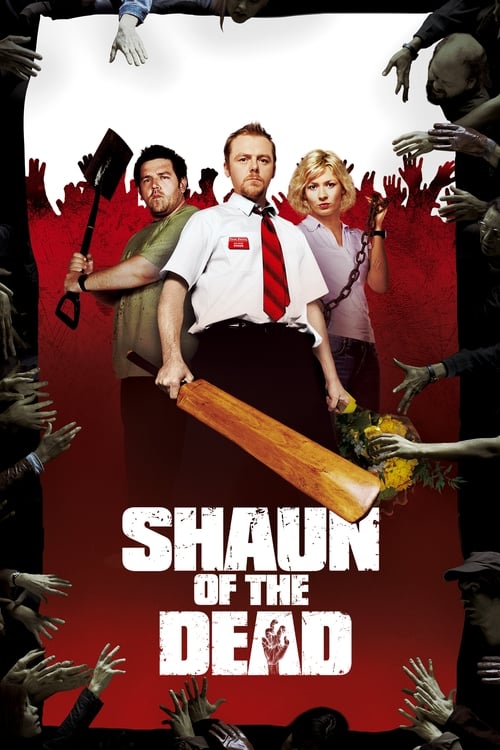
Shaun of the Dead
Plot
Shaun lives a supremely uneventful life, which revolves around his girlfriend, his mother, and, above all, his local pub. This gentle routine is threatened when the dead return to life and make strenuous attempts to snack on ordinary Londoners.
Get the Weekly Woke Watchlist
New and trending movies scored for woke bias, preachy messaging, and forced political themes — before you waste your evening.
No spam. One useful email per week.
Overall Series Review
Categorical Breakdown
The plot focuses entirely on a group of white, British, working to middle-class characters, with their merit or failure determined by their response to the crisis, not by their race or identity group. The main character’s arc involves him rising from an incompetent slacker to a responsible hero, a trajectory based purely on character development. There is no presence of an intersectional lens, vilification of 'whiteness,' or forced insertion of diversity for didactic purposes.
The film satirizes the mindlessness of contemporary English consumer and service culture; the zombies literally represent the apathetic masses. However, the emotional core of the film involves Shaun attempting to save his mother, his girlfriend, and his favorite local pub, 'The Winchester.' The pub functions as a classic 'Chesterton's Fence,' a cherished institution and a literal fortress against chaos, signifying a defense of one's familiar culture and local community, not a hostility toward them.
The main female character, Liz, is portrayed as more mature and put-together than Shaun, demanding that he 'grow up' and take responsibility. This is the catalyst for his heroic journey, not a prelude to his emasculation. Her competence is pragmatic, not a 'Mary Sue' presentation; she still relies on Shaun and the group for survival and protection. The core message is a celebration of responsible masculinity and the establishment of a committed, stable male-female pairing, a complementarian ideal.
The story is a heterosexual romantic comedy at its core, centered on Shaun winning back his girlfriend Liz, and deals with traditional relationships (boyfriend/girlfriend, mother/son, step-father). The narrative is entirely normative. There is no presence or foregrounding of alternative sexualities, explicit deconstruction of the nuclear family unit, or discussion of gender ideology.
Religion and theology are largely absent from the narrative. The film makes no commentary or critique on Christianity or organized religion. Morality is framed around the objective truth of human life being worth saving, and the immediate, transcendent moral duty of protecting one's loved ones from the undead threat. Faith is neither a source of strength nor a target of ridicule.
Get the Weekly Woke Watchlist
New and trending movies scored for woke bias, preachy messaging, and forced political themes — before you waste your evening.
No spam. One useful email per week.