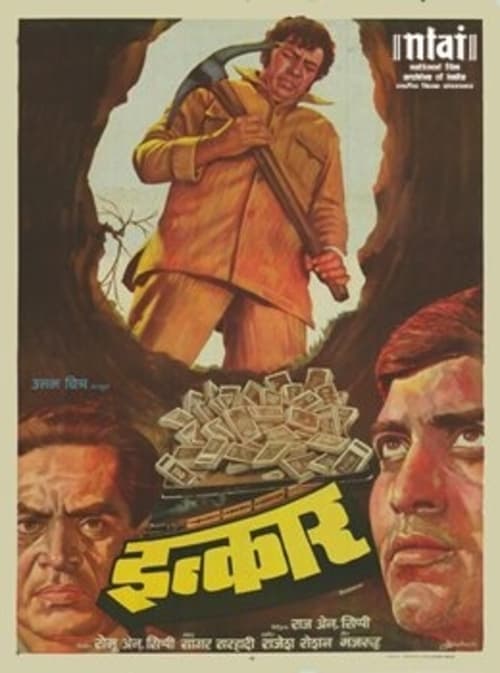
Inkaar
Plot
Haridas Choudhury, a wealthy and honest shoe company owner, faces a moral dilemma when his Chauffeur's son (Bansi) is mistakenly kidnapped instead of his son. Inspector Amar is assigned to the case and while the search for Bansi is on-going Haridas is losing control of his company.
Get the Weekly Woke Watchlist
New and trending movies scored for woke bias, preachy messaging, and forced political themes — before you waste your evening.
No spam. One useful email per week.
Overall Series Review
Categorical Breakdown
The narrative directly addresses class disparity by forcing a wealthy man to choose between his business and the life of his poor servant's son. The resolution champions a universal conscience and the value of every individual's life, regardless of their social standing or 'class' identity. The core theme elevates character merit and morality over intersectional hierarchy. The focus is on a moral choice, not a lecture on systemic oppression.
The film is an Indian production set in Mumbai, making the Western-centric definition of 'oikophobia' less applicable. The criticism present is aimed at the corruption and economic disparity within society, but the central figures (Haridas and Inspector Amar) uphold core values like honesty, justice, and family. Haridas, the self-made man, is initially shown in a positive light for his principles in business, and his family life is celebrated. The culture and nation are the setting for an ethical challenge, not a source of hatred or demonization.
Gender dynamics are traditional; the wealthy Haridas is in a 'typical patriarchal role,' and his family life is portrayed as a 'happy family life' unit. The female lead, Geeta, operates as a supportive figure and acts as the moral conscience who reminds her brother of his principles. Her role is complementary to the male protagonist (the Inspector) and the main moral agent (her brother). There is no 'Girl Boss' trope, anti-natalism, or explicit emasculation of the male characters, who are defined by their authority and professionalism.
As a 1977 Indian crime thriller, the film operates entirely within the normative structure. The central relationships are traditional male-female pairings. There is no presence of alternative sexualities, gender ideology, or deconstruction of the nuclear family unit. Sexuality is not a central theme, and there is no political lecturing on it.
The entire plot hinges on the wealthy Haridas choosing an Objective Truth and a higher moral law (saving the child) over material gain (saving his business). This emphasis on 'usool' (principles/conscience) as a transcendent moral force directly counters moral relativism and subjective power dynamics. The film is not centered on Christianity, but it is deeply rooted in an ethical framework that values honor and life, not anti-theism.
Get the Weekly Woke Watchlist
New and trending movies scored for woke bias, preachy messaging, and forced political themes — before you waste your evening.
No spam. One useful email per week.