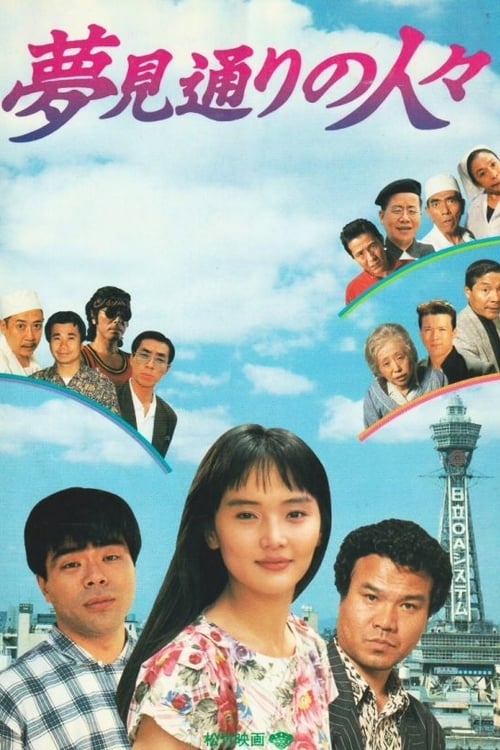
Dream Street
Plot
A comedy about the lives of people living in the shopping district of Osaka.
Get the Weekly Woke Watchlist
New and trending movies scored for woke bias, preachy messaging, and forced political themes — before you waste your evening.
No spam. One useful email per week.
Overall Series Review
Categorical Breakdown
The film centers on the working-class community dynamics of a local Osaka shopping district, and characters are defined by their individual personalities and roles within that culture. The entire cast is Japanese, a natural fit for the setting, with no racial or intersectional hierarchy presented as a political lecture. The narrative focuses on universal struggles for survival and justice against local thugs, not on immutable characteristics.
The setting is a 'quaint and colorful' Osaka shopping district, and the narrative focuses on the gritty, yet heartfelt, vitality of this specific Japanese community. The struggles depicted are local (economic hardship, crime, neighborhood development) but the merchants are portrayed as 'hardy, feisty combatants,' reflecting appreciation for their resilience. The film presents the home culture not as corrupt, but as a protective, if flawed, place where people find 'comic relief in their hard lives.'
Gender dynamics are traditional for a 1989 working-class Japanese setting, focusing on distinct roles. The movie features an 'elderly widow' who is a key victim in a development scheme and a 'demure' teenage girl who is romantically pursued by the burly butcher. While an elderly woman is victimized and the young woman is 'demure,' there is no overt 'Girl Boss' or anti-natalist messaging present. Character roles align with the context of the era and community.
The narrative follows traditional male-female pairings and conflicts related to romance, marriage, and family, such as the love interest of the narrator and the teen's interest in the butcher. There is no evidence of the centering of alternative sexualities, deconstruction of the nuclear family, or the presentation of gender ideology, which is typical for a 1989 Japanese film about a working-class merchant community.
The core conflicts are entirely secular, dealing with business, crime, love, and community survival. The film does not feature any substantial religious characters or plot lines, neither for nor against, but its focus on objective community morality (good neighbors vs. violent thugs/yakuza) suggests a belief in a higher standard of behavior beyond subjective 'power dynamics.' There is no specific hostility toward Christianity or any other religion.
Get the Weekly Woke Watchlist
New and trending movies scored for woke bias, preachy messaging, and forced political themes — before you waste your evening.
No spam. One useful email per week.