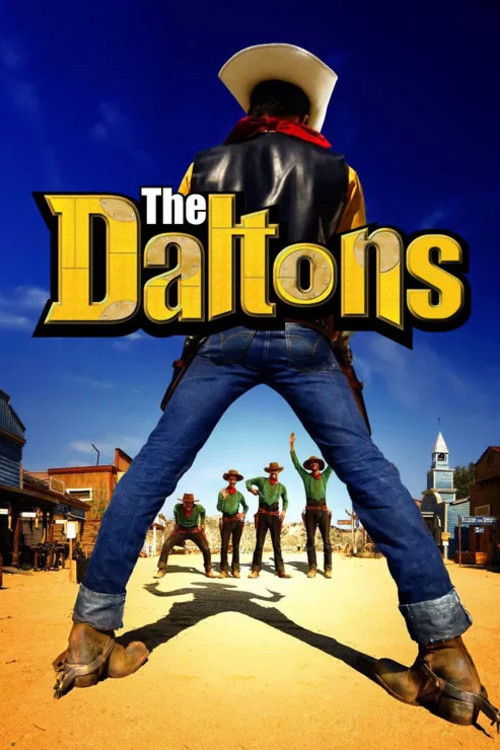
Lucky Luke and the Daltons
Plot
Joe and Averell are the eldest and youngest of the four Dalton brothers, the worst outlaws in Wild West history...
Get the Weekly Woke Watchlist
New and trending movies scored for woke bias, preachy messaging, and forced political themes — before you waste your evening.
No spam. One useful email per week.
Overall Series Review
Categorical Breakdown
The movie casts actors of North African and mixed-race descent in the roles of three of the four Dalton brothers, characters who are historically and canonically white in the original comic series. This decision represents a clear race-swapping of a white fictional family. The narrative centers on this now-diverse criminal gang, though their failure and dimwitted nature are the main source of comedy, rather than their competence.
The entire premise is a broad comedic parody of the American Wild West, a central archetype of Western culture. The film continues the source material's tradition of satirizing Western mythology and its 'self-mythologization.' The protagonists are outlaws whose only goal is to commit grand larceny, framing the institutions of law and order (like the bank) as obstacles for bumbling anti-heroes, which deconstructs the traditional hero-lawman narrative.
The matriarch, Ma Dalton, is the supreme authority figure in the family, a criminal mastermind who kicks her four sons out of the house. She initiates the entire plot by demanding they succeed at their criminal 'career' to earn her pride. Her four male sons are uniformly depicted as 'dimwitted' and 'incompetent' criminals who are constantly vying for her approval, which serves to emasculate the male protagonists in favor of a dominant female leader.
The narrative is a straightforward comedy-Western focused on a heist and a dysfunctional family of criminals. The plot contains no central themes, characters, or dialogue pertaining to alternative sexualities, gender identity, or a deconstruction of the male-female normative structure.
The core conflict revolves around robbing a bank and a search for a 'magic hat' that grants invincibility, which introduces a supernatural element rooted in folklore, not religion. The story avoids any commentary, hostility, or lecturing on traditional religion, faith, or the concept of a transcendent moral law.
Get the Weekly Woke Watchlist
New and trending movies scored for woke bias, preachy messaging, and forced political themes — before you waste your evening.
No spam. One useful email per week.