Two and a Half Men
Season 12 Analysis
Season Overview
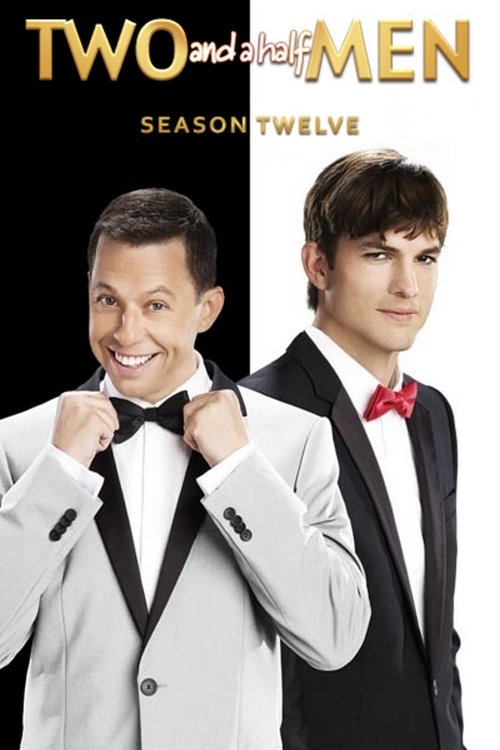
In the final season, Walden and Alan take drastic (and hilarious) steps to redefine family, love, and what it means to finally grow up.
Season Review
Categorical Breakdown
The narrative does not rely on race or intersectional hierarchy for its conflict. The main characters, two white males, are the protagonists of the story and are portrayed as flawed but ultimately sympathetic in their pursuit of a child. Forced diversity is not a driving factor, and there is no vilification of 'whiteness' or lectures on privilege.
The central story arc is fundamentally about the desire to build a family and a 'home' to find meaning, which acts as a shield against the chaos of Walden's prior life. This is a pro-social, pro-family message, even if achieved through unconventional means. There is no explicit hostility toward Western civilization or a deconstruction of American heritage.
The show largely continues its long-running use of women as objects of desire or emotionally unstable foils, which is counter to the 'Girl Boss' trope. However, the lead males are consistently depicted as incompetent or childish bumbling figures, which mildly supports the emasculation of males trope. The entire plot is driven by a strong pro-natal message (Walden's desire for a child) which runs against anti-natalist themes.
The season's main plot revolves entirely around the exploitation of same-sex marriage, presenting it not as a genuine expression of love or identity, but as a legal loophole for two straight friends to adopt. This narrative choice deconstructs the traditional concept of a nuclear family and treats the institution of marriage as a disposable tool, which centers the political application of sexual identity/legislation. The show explicitly frames the characters' sexuality as irrelevant, but only in the context of subverting the system's rules.
The show operates in a world of secular vice and moral relativism but does not feature explicit anti-theism. Traditional religion is ignored entirely, and the characters' moral vacuum is simply a comedic backdrop for their self-serving behaviors. There is no depiction of Christian characters as villains or active lecturing against faith as the root of evil.