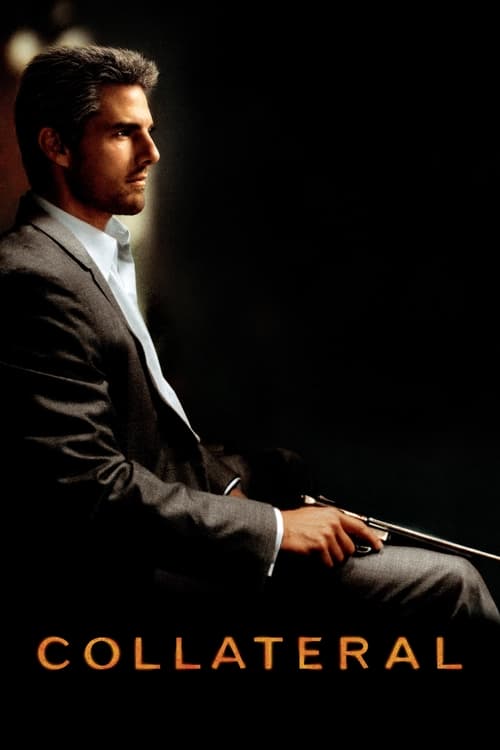
Collateral
Plot
Cab driver Max picks up a man who offers him $600 to drive him around. But the promise of easy money sours when Max realizes his fare is an assassin.
Get the Weekly Woke Watchlist
New and trending movies scored for woke bias, preachy messaging, and forced political themes — before you waste your evening.
No spam. One useful email per week.
Overall Series Review
Categorical Breakdown
The movie establishes a universal meritocracy where the protagonist, a cab driver, and the main female character, a prosecutor, are defined by their personal character, dreams, and competence, not their race. The core conflict is a philosophical clash between two men, one nihilistic and the other empathetic. Character success or failure rests entirely on individual choices and moral fortitude.
The setting, a dark, isolated Los Angeles, emphasizes the emotional and moral disconnectedness of modern urban life. The villain's ideology is a philosophical nihilism, claiming human life is insignificant. This is a critique of a dehumanizing modern worldview, but it is Max's traditional moral perspective and courage that ultimately defeats the nihilistic villain, framing objective good as a shield against chaos.
The most prominent female character is a sharp, successful District Attorney, representing professional capability and merit. She is not presented as a 'Girl Boss' who instantly excels without effort, nor is the main male character emasculated; he undergoes an arduous transformation to gain masculine agency. There is no anti-natalist or anti-family messaging present in the narrative.
The narrative does not center or feature alternative sexualities, gender identity issues, or any critique of the traditional male-female pairing or nuclear family. The sexual dynamics are private, limited to a brief, respectful connection between Max and Annie.
The primary theme is a battle between moral relativism, championed by the villain who believes life is meaningless, and a transcendent moral value, championed by the hero who acts on the conviction that every life is valuable. The movie strongly validates the concept of Objective Truth and higher moral law through the hero’s redemptive arc and the villain’s failure.
Get the Weekly Woke Watchlist
New and trending movies scored for woke bias, preachy messaging, and forced political themes — before you waste your evening.
No spam. One useful email per week.