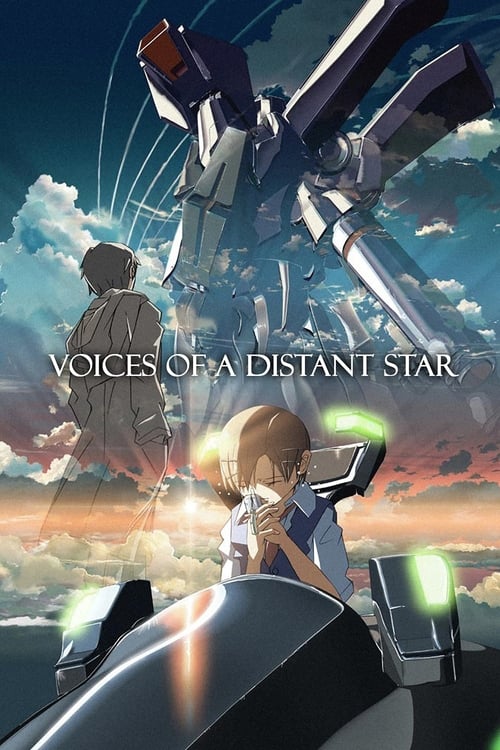
Voices of a Distant Star
Plot
It is 2046 when a mysterious alien force begins their annihilation of the human race. Leaving behind the one person she loves, Mikako joins the interstellar battle as a pilot. And so - while Mikako risks her life to save mankind - Noboru waits. The two lovers, worlds apart, desperately strive to remain connected as the gap between them widens at a frightening pace.
Get the Weekly Woke Watchlist
New and trending movies scored for woke bias, preachy messaging, and forced political themes — before you waste your evening.
No spam. One useful email per week.
Overall Series Review
Categorical Breakdown
The story is an intimate character drama between two ethnically Japanese teenagers, Mikako and Noboru. Race, ethnicity, and intersectional identity are not mentioned, depicted, or made relevant to the plot in any way. Meritocracy is implied, as Mikako is selected for the space mission based on her high academic and athletic abilities.
The central conflict is humanity fighting an alien race, the Tarsians, to protect Earth and mankind. Mikako’s emotional core is her intense longing for her home planet and her friend's mundane life there, which frames Earth and its domesticity as a cherished place to be defended, not a corrupt one to be condemned.
Mikako is an exceptionally capable mecha pilot and a vital warrior for humanity, embodying a 'Girl Boss' of action. However, the narrative undercuts the pure 'Girl Boss' trope by focusing primarily on her profound loneliness and desperate yearning to return to a simple, traditional life with the man she loves. The male lead, Noboru, is portrayed in the traditionally female role of the one waiting at home, which reframes the sorrow of separation for both parties rather than emasculating him or celebrating career over connection.
The core and only relationship depicted is the heterosexual romantic bond between Mikako and Noboru. The plot does not feature any alternative sexualities, gender ideology, or deconstruction of the male-female pair or the family unit. The focus is exclusively on normative structure.
The narrative is a science-fiction romance dealing with physics, space travel, and emotional connection. The plot is entirely secular, containing no religious or anti-religious elements. The moral compass is derived from the universal human experience of enduring love and longing, not from a critique of or adherence to any spiritual or religious system.
Get the Weekly Woke Watchlist
New and trending movies scored for woke bias, preachy messaging, and forced political themes — before you waste your evening.
No spam. One useful email per week.