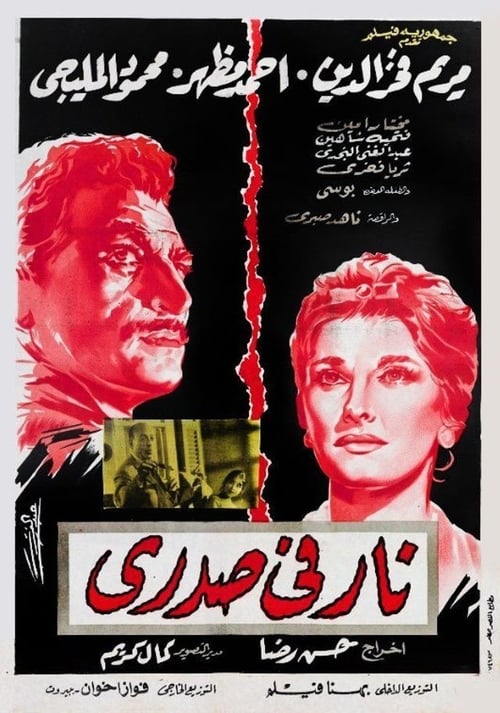
Fire in My Heart
Plot
Dr. Shawki (Ahmed Mazhar) falls in love with piano teacher Laila (Maryam Fakhruddin), and they get married. With his constant debts, Leila decides to give piano lessons to Alia Hanim's daughter Aida secretly to pay the debts, but things take a bad turn when Aida's brother spreads nasty rumors about her.
Get the Weekly Woke Watchlist
New and trending movies scored for woke bias, preachy messaging, and forced political themes — before you waste your evening.
No spam. One useful email per week.
Overall Series Review
Categorical Breakdown
The narrative's conflict is entirely based on personal merit, financial responsibility, and social reputation, not on immutable characteristics or race. The drama involves a husband's debt and a wife's attempt to remedy it through work. There is no focus on intersectional hierarchy, no vilification of 'whiteness,' and no forced diversity, as the cast and setting are culturally authentic to 1960s Egypt. Character is judged by actions within their social context.
The film's focus is on a domestic crisis, marital fidelity, and the defense of the family's honor within its own society. There is no hostility toward Western civilization, nor are any external cultures depicted as morally superior. The central conflict is internal and local, grounded in the immediate social sphere and not an indictment of civilization itself.
Laila, the female lead, exhibits strong resourcefulness and capability by taking the initiative to work secretly to resolve her husband's debts, which presents her as a proactive figure. The male character, Dr. Shawki, is depicted as financially incompetent and the source of the family's crisis. The villainous element is a man who spreads nasty rumors, positioning the man as the source of societal harm. However, Laila's goal is to support and save her husband and the family unit, keeping the message ultimately within a complementary, pro-family framework, which mitigates a high 'Girl Boss' score.
The plot centers on the traditional male-female pairing in a marriage threatened by financial debt and rumors of infidelity, which reinforces the normative structure. Sexual identity is not a factor in the plot or character development. There is no presence of alternative sexualities, deconstruction of the nuclear family, or gender ideology lecturing.
The conflict is a secular social drama about money and reputation. The narrative does not engage with religious themes, offer hostility toward faith, or portray religious figures as villains or bigots. The moral framework is one of objective social honor and responsibility, not subjective power dynamics or moral relativism.
Get the Weekly Woke Watchlist
New and trending movies scored for woke bias, preachy messaging, and forced political themes — before you waste your evening.
No spam. One useful email per week.