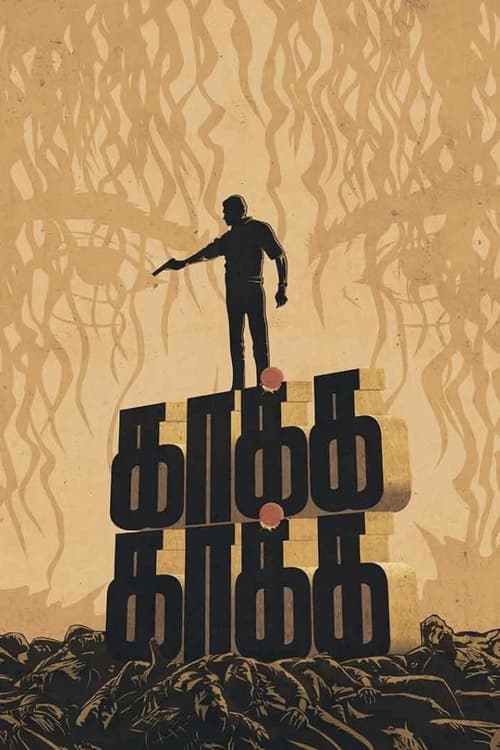
Kaakha Kaakha
Plot
After a police team kills his brother, a drug-dealing gangster vows to kill the entire team and their respective families.
Get the Weekly Woke Watchlist
New and trending movies scored for woke bias, preachy messaging, and forced political themes — before you waste your evening.
No spam. One useful email per week.
Overall Series Review
Categorical Breakdown
The narrative rests entirely on the meritocracy of moral action: an honest, brave police officer is judged as a hero, and a drug-dealing gangster is judged as an evil villain. The characters are defined by their professional competence and moral choices, not by race or immutable characteristics. Since the film is set in India with a local cast, modern Western identity politics tropes like vilifying 'whiteness' or forced diversity are entirely absent.
The film champions the idea of institutional protection, portraying the police force as a necessary shield against the chaos of organized crime in the city. The protagonist is an 'honest but stone-hearted' IPS officer dedicated to cleaning up his home, Chennai. The central conflict is about defending the social order and the personal lives within it, which is an affirmation of the home culture and its protective institutions, not a deconstruction or demonization of them.
The female lead is a school teacher who is not portrayed as a 'Girl Boss' but as the emotional heart and civilizing influence on the protagonist. She is his great love and ultimate vulnerability. The narrative's entire tragedy stems from the villain targeting this traditional relationship and family unit, which emphasizes the value of that bond. Masculinity in the protagonist is protective, strong, and competent; the male hero is not emasculated but deeply devoted to his duty and his woman.
The movie operates within a normative structure, centering the traditional male-female pairing and the formation of a nuclear family as the hero's key life development and main weakness exploited by the villain. Alternative sexualities or gender ideology are not present, nor is there any commentary that deconstructs the traditional family unit.
The core theme is an objective moral battle between a just (though ruthless) cop and a vicious, amoral criminal. The pursuit of vengeance and justice operates under a framework of objective truth—the drug lord is wrong and must be stopped. The narrative does not contain any hostility toward religion, nor does it promote moral relativism; the villain's actions are simply evil.
Get the Weekly Woke Watchlist
New and trending movies scored for woke bias, preachy messaging, and forced political themes — before you waste your evening.
No spam. One useful email per week.