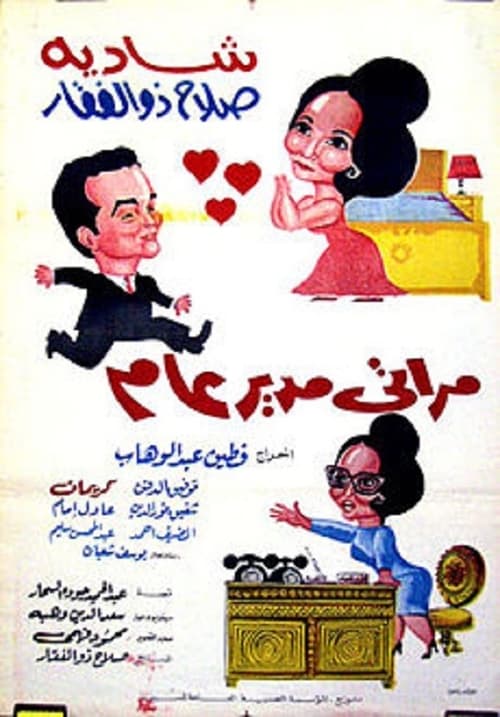
My Wife the General Manager
Plot
A married couple ends up working at the same company where the wife is a general director. This arouses the suspicion of their co-workers who do not know they are married.
Get the Weekly Woke Watchlist
New and trending movies scored for woke bias, preachy messaging, and forced political themes — before you waste your evening.
No spam. One useful email per week.
Overall Series Review
Categorical Breakdown
The movie is an Egyptian production from 1966 with an all-Egyptian cast. The conflict is purely about professional hierarchy and marital secrecy, operating outside of the Western-centric intersectional lens. Characters are judged by their professional competence and personal conduct, aligning with the principle of universal meritocracy within its cultural context.
The film acts as a social critique, pointing out specific prejudices and resistance against women in corporate positions within its own home culture. This attempt to reform a specific social prejudice is a critique of a custom, not a condemnation of the entire civilization, ancestors, or home. The narrative does not frame the culture as fundamentally corrupt or racist, reflecting a position closer to Chesterton’s Fence with a desire for internal social improvement.
The wife is instantly elevated to the General Manager position, directly embodying a form of the 'Girl Boss' trope that creates significant social and professional conflict. The entire plot is predicated on the husband's (Hussein's) difficulty and the co-workers' suspicious reaction to a woman holding such authority, which supports the theme of emasculation and the challenge to complementary gender roles. The movie does not focus on anti-natalism, but the career is the central narrative driver that upends the marital dynamic.
The entire sexual dynamic of the film revolves around a traditional married male-female couple and the misunderstanding of an alleged extramarital affair. The film reinforces the normative structure of the nuclear family as the standard unit by making its secrecy the main plot point, with no presence of alternative sexualities, queer theory, or gender ideology.
The conflict is secular, focusing on professional jealousies, workplace rumors, and marital secrecy. There is no narrative hostility toward religion, especially Christianity, nor any suggestion that morality is subjective. The resolution of the marital conflict likely depends on the acknowledgment of a higher moral law concerning the marriage bond.
Get the Weekly Woke Watchlist
New and trending movies scored for woke bias, preachy messaging, and forced political themes — before you waste your evening.
No spam. One useful email per week.