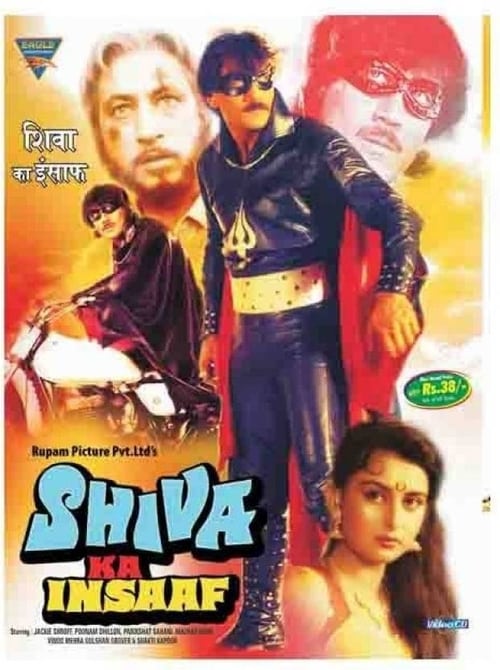
Shiva Ka Insaaf
Plot
A child is raised by his father's friends, who teach him the art of combat. They also provide him with supernatural weapons to help him avenge his parents' death.
Get the Weekly Woke Watchlist
New and trending movies scored for woke bias, preachy messaging, and forced political themes — before you waste your evening.
No spam. One useful email per week.
Overall Series Review
Categorical Breakdown
The plot's central conflict is a personal quest for vengeance against a criminal, not a lecture on systemic oppression or privilege. The hero is trained by three mentors named Ram, Rahim, and Robert, who symbolically represent Hindu, Muslim, and Christian faiths, a narrative choice that champions universal unity and meritocracy over immutable characteristics. The casting is regionally authentic.
The narrative is fundamentally centered on defending the family unit and seeking justice, the exact opposite of civilizational self-hatred. The protagonist's supernatural identity, Shiva, is inspired by a Hindu deity, and his cause is to uphold 'Insaaf' (Justice), reinforcing faith and traditional values as shields against chaos. The film celebrates local culture and mythological heritage.
The hero's journey is a masculine quest for vengeance and justice, dominating the narrative. The female lead, a brave reporter, is a supporting figure, not a 'Girl Boss' who instantly outshines all male characters. There is no messaging that frames motherhood as a prison, and the focus remains on the male hero's vitality and protective nature.
The story is a conventional 1980s Bollywood superhero masala film focused on action, retribution, and a traditional male-female romance. The structure is normative, and there is no presence of alternative sexualities, deconstruction of the nuclear family, or any lecturing on gender ideology.
The hero’s masked identity is named Shiva, and his powers are directly derived from his belief in the Hindu deity Shiva and the pursuit of 'Shiva Ka Insaaf' (Shiva's Justice). The plot explicitly uses faith and a higher moral law as the source of the protagonist's strength and motivation, directly opposing moral relativism or hostility toward religion.
Get the Weekly Woke Watchlist
New and trending movies scored for woke bias, preachy messaging, and forced political themes — before you waste your evening.
No spam. One useful email per week.