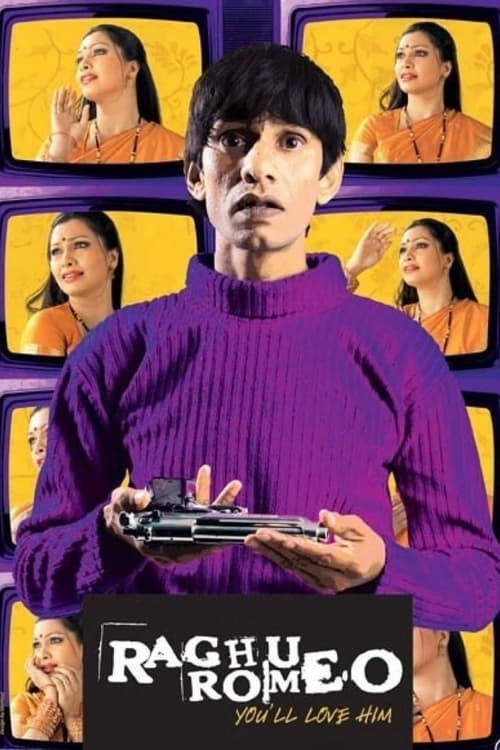
Raghu Romeo
Plot
An employee at a strip club kidnaps his favorite actress to protect her from mob hit men.
Get the Weekly Woke Watchlist
New and trending movies scored for woke bias, preachy messaging, and forced political themes — before you waste your evening.
No spam. One useful email per week.
Overall Series Review
Categorical Breakdown
The character conflicts stem from a mix of socio-economic class (lower-middle-class waiter, dance bar environment, mob debt) and the psychological disconnect between fantasy and reality. Characters are judged by their simple human failings and delusions, not by any imposed hierarchy of immutable characteristics. There is no evidence of vilifying a dominant racial group or forced diversity; the cast is authentic to its Mumbai setting.
The film's satirical lens is focused on the artificial and kitschy nature of Indian television soap operas and the organized crime prevalent in the modern entertainment industry. It critiques contemporary pop culture and urban corruption, not the nation's foundational heritage, ancestors, or home culture. The home culture is presented as a neutral backdrop or a source of familial constraint, rather than fundamentally corrupt or racist.
The male protagonist, Raghu, is repeatedly portrayed as an emasculated figure, described as 'guileless,' 'clueless,' and 'henpecked by his mother' and his boss. Conversely, the secondary female lead, Sweety, is a pragmatic, street-smart bar dancer who navigates a criminal world and shows a soft spot for the inept hero, embodying a strong, cynical female character. The lead actress's real-life persona is 'not-so-nice,' deconstructing the 'suffering heroine' ideal and suggesting that strength lies in a cynical pragmatism outside traditional female roles.
The core relationships and character motivations revolve around traditional male-female pairings (Raghu's obsession with the actress and the hitman's relationship with the bar dancer). The narrative is completely devoid of any attempt to center alternative sexualities, deconstruct the nuclear family structure as an oppressive force, or introduce a contemporary gender ideology lecture.
The film’s central spiritual critique targets the displacement of reality with the false idol of the TV soap opera, which becomes the main source of moral and emotional truth for the hero. The narrative is primarily secular, focusing on crime and media satire. There is no evidence of direct hostility towards organized religion or the vilification of religious characters.
Get the Weekly Woke Watchlist
New and trending movies scored for woke bias, preachy messaging, and forced political themes — before you waste your evening.
No spam. One useful email per week.