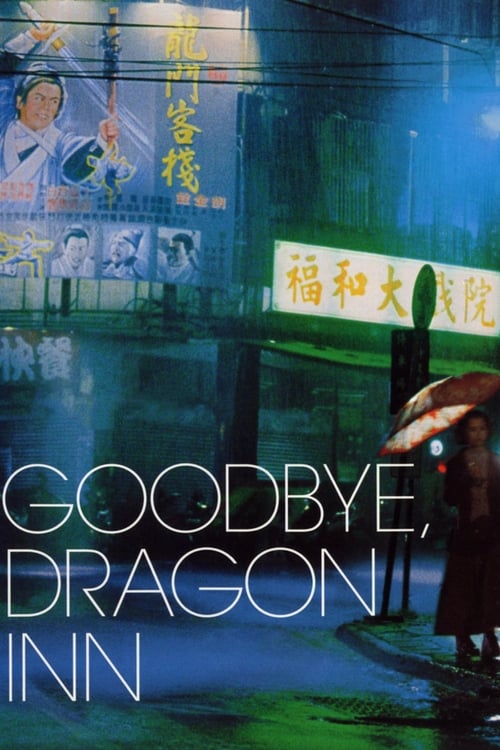
Goodbye, Dragon Inn
Plot
On a dark, wet night in Taipei City, a cavernous old picture palace is about to close its doors forever. A meager audience, the remaining few staff, and perhaps even a ghost or two, watch King Hu’s wuxia classic "Dragon Inn", each haunted by memories and desires evoked by cinema itself.
Get the Weekly Woke Watchlist
New and trending movies scored for woke bias, preachy messaging, and forced political themes — before you waste your evening.
No spam. One useful email per week.
Overall Series Review
Categorical Breakdown
The narrative does not rely on race or immutable characteristics for systemic critique. All main characters are non-Western (Taiwanese or Japanese), and their struggles are universally human themes of isolation, memory, and unfulfilled desire, not privilege or oppression based on an intersectional hierarchy. Character is judged by the content of their soul, which is shown as equally isolated regardless of their status.
The film’s critique is directed toward the perceived decline of local Taiwanese cinema culture, which is implicitly or explicitly attributed to the dominance of foreign media, particularly American/Hollywood blockbusters. This is a defense of a local, non-Western home culture against external, capitalist cultural forces, not hostility toward or self-hatred of one's own Western civilization or ancestors. The film respects the 'ancestors' of Taiwanese cinema by featuring and honoring the aging stars of the classic film being screened.
The primary female character, the disabled ticket attendant, is portrayed with quiet dignity and deep, unrequited affection, a stark contrast to the skilled, heroic female swordswomen she observes on screen. This contrast highlights a sobering reality, but she is not depicted as a 'Girl Boss' or a flawless 'Mary Sue.' She is a sympathetic figure in a mundane job, pursuing a simple, traditional desire for connection. The men are similarly unheroic, isolated, and desiring, suggesting a universal state of human disconnection rather than male emasculation.
A significant portion of the film's minimal narrative centers on the movie theater functioning as a gay cruising space. The long, static takes of men pursuing sexual contact in the dark spaces and the men's restroom make alternative sexuality a prominent and explicitly visible aspect of the setting and plot. This activity is centered as a core feature of the communal space and is not presented as a normative structure. The critical analysis of the film further frames this as an exploration of 'Queer sexualities' and a 'deconstruction of the homo/hetero binary.'
The film is secular in its concerns, focusing on the loss of cinematic history, architecture, and human connection. Themes of 'ghosts' and 'haunting' are metaphorical, referring to memories and longing rather than theological concerns or an attack on traditional religion. The morality presented is humanist and subjective, exploring the sadness of loneliness without invoking or showing hostility toward faith or a higher moral law.
Get the Weekly Woke Watchlist
New and trending movies scored for woke bias, preachy messaging, and forced political themes — before you waste your evening.
No spam. One useful email per week.