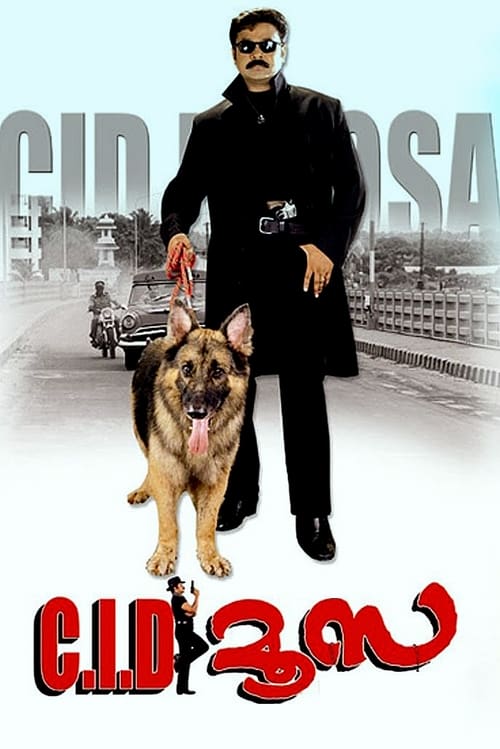
C.I.D. Moosa
Plot
Moosa, a private detective, faces many challenges while solving various cases. His only rival is his own brother-in-law, Peethambaran, who is a police officer.
Get the Weekly Woke Watchlist
New and trending movies scored for woke bias, preachy messaging, and forced political themes — before you waste your evening.
No spam. One useful email per week.
Overall Series Review
Categorical Breakdown
The plot centers on Moolankuzhiyil Sahadevan’s personal drive to become a successful detective, illustrating a focus on individual ambition and personal rivalry rather than immutable characteristics. Meritocracy is the operating principle, even if the hero's 'merit' is largely luck and determination. The film avoids all themes of race, caste, or intersectional hierarchy as an explanatory force for society or personal conflict.
The central mystery involves the protagonist protecting the state's Chief Minister from a terrorist plot. This plot structure affirms the importance of national security and established civil authority. Corruption is depicted as the failure of specific individuals (a police commissioner), not a condemnation of the home culture, nation, or its foundational institutions.
The hero's romantic pursuit involves stalking his love interest, leading to her losing her job. He confronts her with threats of dominance, pregnancy, and dependency, which the film presents as a successful romantic breakthrough. This dynamic celebrates a hyper-masculine, protective, and dominating form of masculinity, which is the direct antithesis of the 'Girl Boss' trope or contemporary feminist ideology.
The narrative adheres strictly to the normative structure of a traditional male-female romantic pairing. There is no presence of alternative sexual ideologies, deconstruction of the nuclear family, or any form of gender theory lecturing. The film's focus remains squarely on action, comedy, and traditional romance.
The plot contains no explicit hostility toward religion or religious institutions. Moral law and objective truth are implicitly upheld by the clear delineation between the heroic detective, the corrupt police officer, and the foreign terrorist threat. The conflict is based on clear-cut good versus evil, not moral relativism.
Get the Weekly Woke Watchlist
New and trending movies scored for woke bias, preachy messaging, and forced political themes — before you waste your evening.
No spam. One useful email per week.