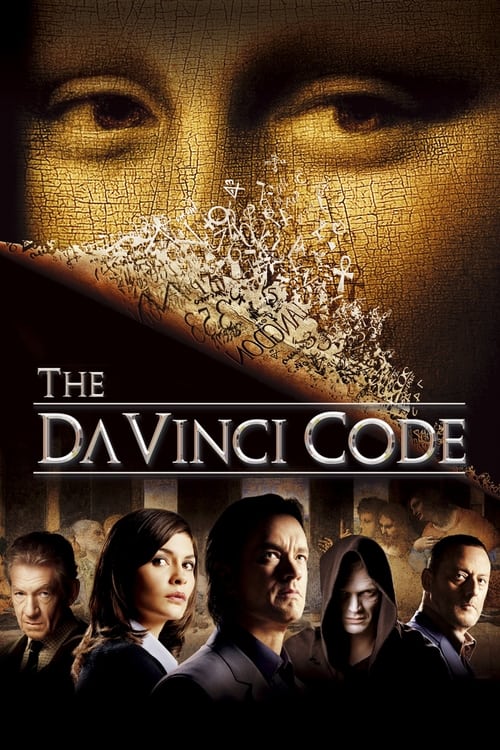
The Da Vinci Code
Plot
A murder in Paris’ Louvre Museum and cryptic clues in some of Leonardo da Vinci’s most famous paintings lead to the discovery of a religious mystery. For 2,000 years a secret society closely guards information that — should it come to light — could rock the very foundations of Christianity.
Get the Weekly Woke Watchlist
New and trending movies scored for woke bias, preachy messaging, and forced political themes — before you waste your evening.
No spam. One useful email per week.
Overall Series Review
Categorical Breakdown
Characters are valued and judged entirely on their intellectual merit and skill in symbology, cryptology, and history, not on immutable characteristics like race. The casting is colorblind to race-swapping and focuses on professional competence. The protagonists are a male professor and a female cryptologist working together as intellectual equals.
The central plot alleges a two-thousand-year-old murderous cover-up maintained by the Catholic Church, a cornerstone institution of Western civilization, to suppress a supposed historical truth. The narrative frame is one of wholesale deconstruction, portraying the very foundations of European heritage and its primary religious institution as fundamentally corrupt and built upon a deliberate fraud.
The core mystery and resulting revelation is the historical suppression of the 'Sacred Feminine' by a patriarchal Christian hierarchy. The Holy Grail is redefined as Mary Magdalene, who is presented as Christ's companion and the carrier of his bloodline. The female co-lead, Sophie Neveu, is a highly competent, career-focused cryptologist who leads the deductive process, embodying the 'Girl Boss' trope that corrects the male lead's 'headiness'.
The story does not center alternative sexualities, gender identity, or queer theory. The central mystery is focused on a traditional male-female pairing (Jesus and Mary Magdalene) and the continuation of a heterosexual bloodline. Sexuality and gender ideology are otherwise absent from the narrative’s core themes.
Traditional Christianity is framed as a massive conspiracy, positing that the divinity of Christ was a 'cynically manufactured' lie created by the early church to consolidate power. The main villains, Opus Dei members, are conservative Christian characters who resort to murder to preserve the faith, painting organized religion as the root of great historical and ongoing evil. The core message is that the Bible is a 'product of man, not of God'.
Get the Weekly Woke Watchlist
New and trending movies scored for woke bias, preachy messaging, and forced political themes — before you waste your evening.
No spam. One useful email per week.