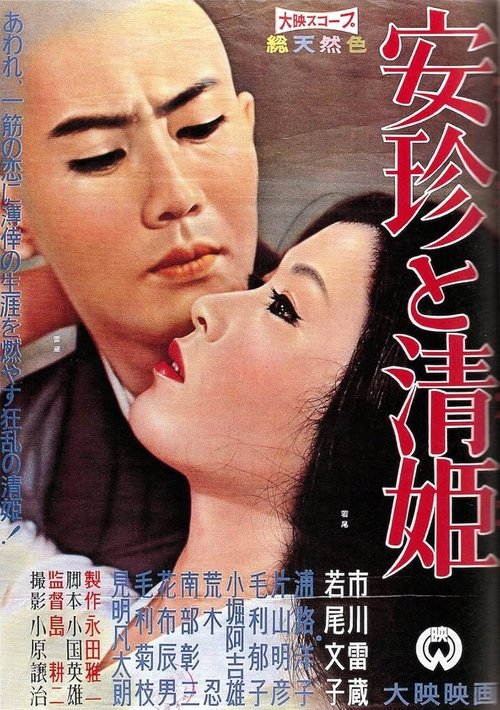
Anchin and Kiyohime
Plot
Princess Kiyo accidentally injures a local priest, Anchin, while on a hunt. She apologizes, but feels irritated by Anchin’s indifference to her in spite of her beauty. One night, while Anchin is recuperating in a hot spring, he is approached by Kiyo. She tells him that she is in love with him.
Get the Weekly Woke Watchlist
New and trending movies scored for woke bias, preachy messaging, and forced political themes — before you waste your evening.
No spam. One useful email per week.
Overall Series Review
Categorical Breakdown
The film is a Japanese-produced adaptation of a Japanese folk legend, starring Japanese actors. Characters are defined by their personal moral and religious conflicts, not by race or immutable characteristics. Casting is culturally and historically authentic to the source material. The narrative exhibits Universal Meritocracy, judging characters by their actions and internal struggle.
The film respects its cultural and religious setting, treating the Buddhist faith and the institution of the temple as a major, enduring force in the characters' lives. The plot is rooted in Japanese heritage, and there is no hostility toward Japanese civilization. The tension comes from a personal failure to uphold traditional vows, not from a deconstruction of the culture itself.
Kiyohime is a female character defined by extreme passion and obsession, which leads to great tragedy, including her own death and her father's suicide. She is not a 'Girl Boss' or 'Mary Sue' but a force of destructive human emotion. Anchin is depicted as a man of faith who is emotionally torn by his vows and natural desire, not a bumbling idiot or 'toxic' male. The drama stems from the conflict between male celibacy and female desire, not from an anti-natalist or anti-family message.
The story centers exclusively on the heterosexual love/passion between a man and a woman, which is forbidden by religious vows. The film maintains a Normative Structure, with no presence or centering of alternative sexualities, queer theory, or discussion of gender ideology. Sexuality remains a private matter and the source of a personal tragedy.
Faith is the central axis of the conflict, with Anchin's Buddhist vows driving his choices. The film does not portray traditional religion as the root of evil. The conclusion involves Anchin embracing his faith, choosing to spend his life in prayer for their souls, affirming Transcendent Morality and the spiritual path as a source of strength and redemption.
Get the Weekly Woke Watchlist
New and trending movies scored for woke bias, preachy messaging, and forced political themes — before you waste your evening.
No spam. One useful email per week.