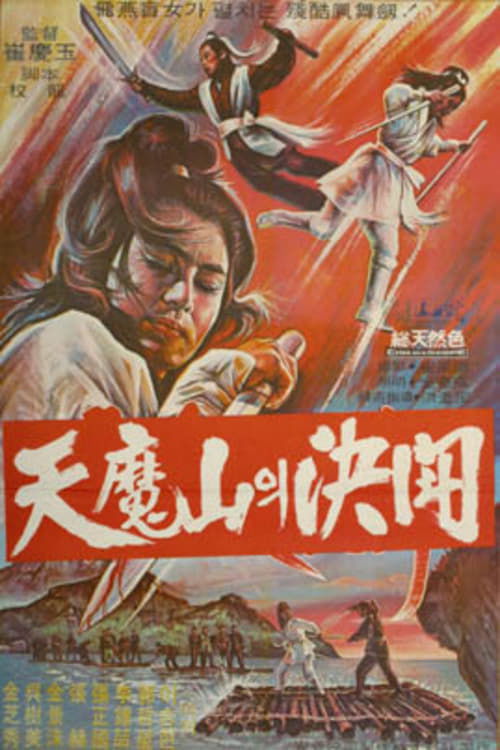
Final Facedown in Cheonma Mountain
Plot
Cheon Do-won and blind Seol Hie attempt to regain the mystic swords 'Earth' and 'Heaven' from the bandits who have stolen them.
Get the Weekly Woke Watchlist
New and trending movies scored for woke bias, preachy messaging, and forced political themes — before you waste your evening.
No spam. One useful email per week.
Overall Series Review
Categorical Breakdown
Characters are judged by their martial skill and moral conduct, which aligns with universal meritocracy. The quest for mystic swords against bandits focuses on a simple good-vs-evil dynamic without relying on intersectional hierarchy. The entirely Korean cast in a Korean setting is historically and culturally authentic.
The film’s setting and conflict are entirely local, centering on Korean mountains and martial arts culture. The narrative shows no hostility toward its own civilization and does not frame the home culture as fundamentally corrupt or racist. External cultures are not introduced as morally superior.
The female lead, Seol Hie, is a blind but highly competent hero who works in partnership with the male lead, indicating a complementarian dynamic where both genders are vital to the mission. The plot is a quest for justice and honor, not a lecture on anti-natalism or female careerism. The female lead is strong but does not emasculate her male counterpart.
The narrative centers on a traditional male and female pairing on a quest. Sexual identity is not a point of discussion or focus. The film maintains a normative structure by having the central duo be a man and a woman who function as a standard partnership without deconstructing the nuclear family or introducing gender theory.
The quest revolves around the 'Earth' and 'Heaven' mystic swords, tying the narrative to a cosmic or spiritual moral order. The story's conflict between heroes and bandits affirms objective truth and a higher moral law where good triumphs over evil. There is no hostility toward religion.
Get the Weekly Woke Watchlist
New and trending movies scored for woke bias, preachy messaging, and forced political themes — before you waste your evening.
No spam. One useful email per week.