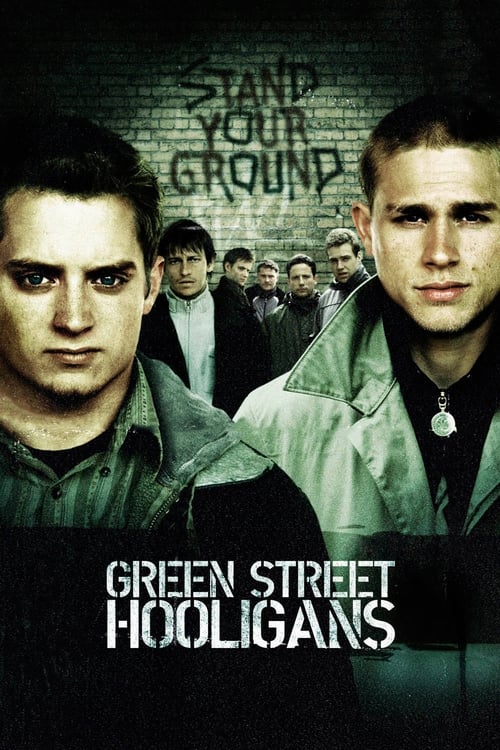
Green Street Hooligans
Plot
After being wrongfully expelled from Harvard University, American Matt Buckner flees to his sister's home in England. Once there, he is befriended by her charming and dangerous brother-in-law, Pete Dunham, and introduced to the underworld of British football hooliganism. Matt learns to stand his ground through a friendship that develops against the backdrop of this secret and often violent world. 'Green Street Hooligans' is a story of loyalty, trust and the sometimes brutal consequences of living close to the edge.
Get the Weekly Woke Watchlist
New and trending movies scored for woke bias, preachy messaging, and forced political themes — before you waste your evening.
No spam. One useful email per week.
Overall Series Review
Categorical Breakdown
The main conflict is a cultural and class clash between the American elite (Harvard student Matt) and the English working-class subculture (the hooligan firm). Characters are judged solely on their merit within the firm, meaning their demonstrated courage and loyalty. The cast reflects the authentic cultural setting of East London football hooliganism without forced insertion of diversity, and the narrative has no focus on intersectional hierarchy or the vilification of whiteness.
The film does not present a broad hostility toward Western civilization. It is a focused examination of a specific, hyper-local English working-class subculture, presenting its intense tribal pride and loyalty as a compelling replacement for traditional institutions. The narrative critiques the violence and destructive nature of this specific 'firm' institution through tragic consequences, rather than demonizing all national culture or celebrating an outside 'Noble Savage' culture.
The film is overwhelmingly centered on male dynamics and the pursuit of male validation through physical confrontation, actively excluding women from the core action. The primary female characters serve as anchors to the conventional, non-violent life that the men are drawn away from. There is a complete absence of 'Girl Boss' or 'Mary Sue' tropes, and masculinity is explored as a necessary, protective force, despite its ultimate recklessness and tragic outcome.
The theme is entirely absent from the plot. The focus on intense, traditional male fraternity in a hyper-masculine environment leaves no room for the centering of alternative sexualities or gender ideology. The family unit is presented in the normative, male-female pairing as a conventional backdrop.
There is no explicit attack on or hostility toward traditional religion. The spiritual life of the characters is displaced onto their fervent, almost religious devotion to the football club and its 'firm' institution. The film is secular in its presentation of morality, showing the firm's self-made code of conduct (loyalty, honor) as a flawed and ultimately catastrophic system, which serves as a critique of that specific, secular moral code rather than a transcendent one.
Get the Weekly Woke Watchlist
New and trending movies scored for woke bias, preachy messaging, and forced political themes — before you waste your evening.
No spam. One useful email per week.