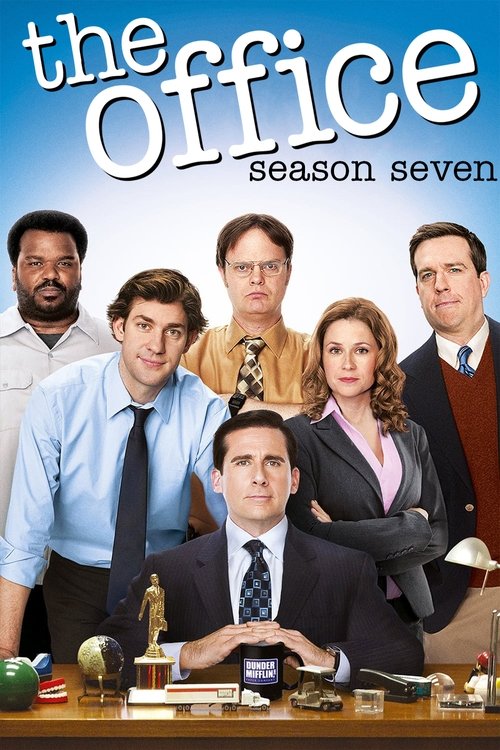
The Office
Season 7 Analysis
Season Overview
In Season 7, Dwight is now the owner of the building, Andy is courting Erin, Jim and Pam struggle with being new parents, and past girlfriends haunt Michael.
Season Review
Categorical Breakdown
The central conflict of the season revolves around Michael's personal journey and finding his replacement, not a focus on intersectional hierarchy. The narrative judges all characters, including white males like Michael and Dwight, based on their individual flaws and merits. Michael's brief successor is a white male who is immediately shown to be incompetent and prone to favoritism.
The series finds humor in the mundane, dreary environment of an American office and the awkward social dynamics within it. The show does not frame the home culture or Western civilization as fundamentally corrupt or racist. Local institutions and the workplace setting are simply the backdrop for the comedy.
Gender dynamics are a source of satire, with the narrative constantly highlighting Michael's sexist and inappropriate behavior without endorsing it. The female characters are presented with complex, realistic flaws and are not perfect "Girl Boss" figures. The plot features the positive dynamic of a young family as Jim and Pam navigate life as new parents.
A main character is established as gay, but this is an integrated fact about his character rather than a political focus of the season. The primary romantic and social storylines revolve around traditional male-female relationships, such as Michael and Holly's engagement and Jim and Pam's marriage and new parenthood. The narrative does not contain themes of gender ideology or a push to deconstruct the nuclear family.
Organized religion appears as a setting for an episode centered on a christening, and the comedy focuses on Michael's social and cultural cluelessness within that context. Faith is not presented as the root of evil, nor are religious characters systematically vilified or portrayed as bigots.