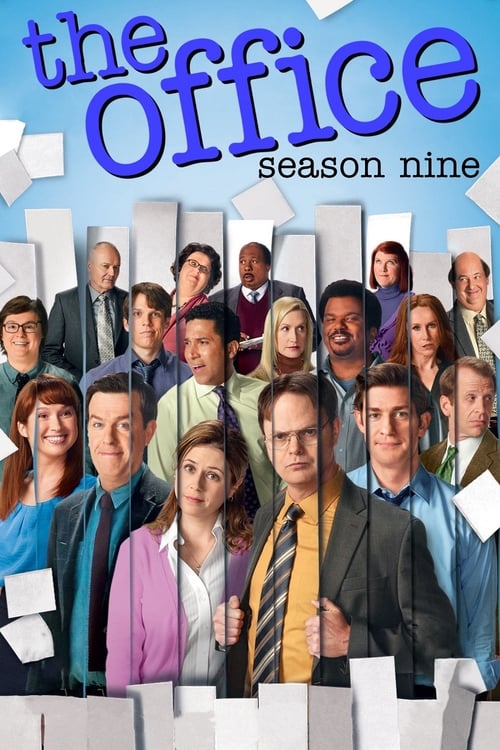
The Office
Season 9 Analysis
Season Overview
In Season 9, Andy finds his true calling in showbiz, Jim lands the job of his dreams, Erin struggles with love, and Angela's marriage isn’t what it seems.
Season Review
Categorical Breakdown
Characters are judged by their personal merits, flaws, and professional competence, not by immutable characteristics. Dwight achieves the manager position based on his long-established competence. Darryl successfully advances his career into Jim's company based on his business skills. The narrative focuses on ambition and interpersonal dynamics rather than systemic oppression or race.
The setting of Scranton and its institutions are the backdrop for human drama and comedy, not objects of fundamental hostility. The main conflict revolves around the American dilemma of choosing between community roots (Pam) and personal ambition (Jim). The season concludes with characters celebrating life's constants: marriage, family, and community, honoring tradition in the finale.
The primary tension involves a woman, Pam, arguing for a stable, family-centered life over her husband's career ambition. Nellie Bertram's character arc culminates in her finding emotional fulfillment not through her career, but through adoption and motherhood. While women hold positions of power, the narrative does not elevate female leads as universally perfect and instead champions complementary roles and family commitment.
The storyline involving Oscar Martinez and his affair with Angela’s husband, Robert Lipton, makes an alternative sexuality central to a major season plot. Robert Lipton is revealed to be a closeted gay man whose traditional marriage served as a front. The resolution shows Oscar co-parenting with the newly married Dwight and Angela, presenting a non-normative family structure as a positive and functional outcome.
The show consistently mocks Angela Martin's character, whose hypocrisy and judgmental attitude are directly tied to her conservative Christian beliefs. This positions the explicitly religious character as a source of comedy and moral rigidity. However, the season ultimately endorses objective virtues like love, loyalty, and fidelity, and celebrates the traditional institution of marriage in the finale.