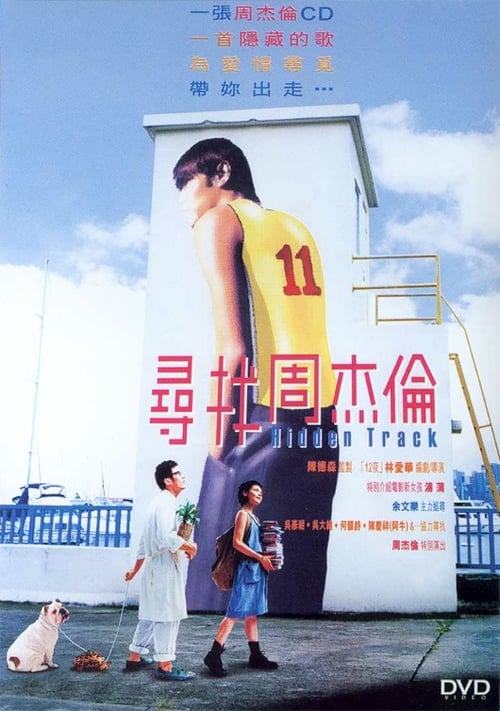
Hidden Track
Plot
Pu Pu is dumped by her boyfriend whom she loves. Before she moves out, she asks to listen to "their song" just one more time, that is the hidden track by Jay Chou. Then she leaves him and goes to her sister's place in Hong Kong. All the while she is there, she searches for the same song, the "hidden track", and from this it leads her onto a journey of discovering love and a new beginning. Despite the whole movie revolving around Jay Chou's song, Jay Chou plays only a cameo part.
Get the Weekly Woke Watchlist
New and trending movies scored for woke bias, preachy messaging, and forced political themes — before you waste your evening.
No spam. One useful email per week.
Overall Series Review
Categorical Breakdown
The film operates within an entirely East Asian, specifically Hong Kong and Mainland Chinese, cultural context. The narrative focuses on the protagonist's emotional state and her personal quest. Characters are judged by their personalities and role in her journey, not by race or intersectional hierarchy. There is no presence of 'whiteness' to vilify or forced diversity insertion.
The film does not express hostility toward its own civilization, home, or ancestors. The protagonist travels from Mainland China to Hong Kong, but this is a journey for personal solace and a fresh start, not an escape from a 'fundamentally corrupt' home culture. The setting is utilized for a colorful, quirky backdrop for the personal quest.
The female protagonist, Pu Pu, drives the plot forward on a quest for emotional self-sufficiency and new love, demonstrating agency. She is not portrayed as a 'perfect' Mary Sue, as her journey is triggered by heartbreak and she makes emotional missteps. While the former boyfriend is seen as a source of pain and one supporting male character is described as an 'asshole man of the world,' the film's focus on her finding a new, potentially complementary romantic partner moves away from an anti-male or anti-natalist message, especially since her sister is portrayed as a pregnant, stable figure.
The core of the film's plot is the protagonist's search for new romantic love following a heterosexual breakup. The narrative maintains a normative structure, centering on traditional male-female pairing as the standard outcome for the romantic quest. There is a complete absence of overt LGBTQ+ ideology, centering of alternative sexualities, or deconstruction of the nuclear family.
The film's plot is entirely secular, revolving around a pop song and personal emotional discovery. There is no mention of traditional religion, faith, or objective moral truth. The morality is personal and relative to the protagonist's emotional state, but this is a common trope in romance-dramas, not an explicit embrace of 'moral relativism' as a hostile stance against faith. The absence of religious themes means there is no hostility toward Christianity or a spiritual vacuum designed to replace it with a social ideology.
Get the Weekly Woke Watchlist
New and trending movies scored for woke bias, preachy messaging, and forced political themes — before you waste your evening.
No spam. One useful email per week.