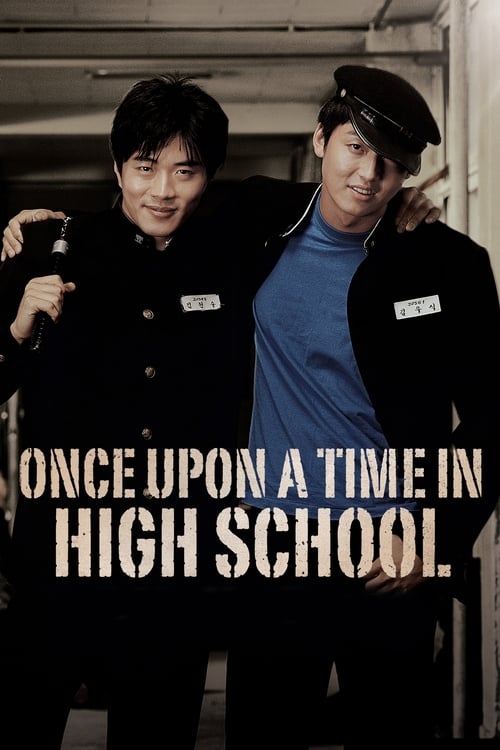
Once Upon a Time in High School
Plot
A model student transfers to the notorious Jungmoon High School known for its severe corporal punishment by teachers and power struggles between school gangs.
Get the Weekly Woke Watchlist
New and trending movies scored for woke bias, preachy messaging, and forced political themes — before you waste your evening.
No spam. One useful email per week.
Overall Series Review
Categorical Breakdown
The film is set in a virtually homogenous South Korean society, and the entire cast is Korean. The conflict centers on social hierarchy, institutional bullying, and individual strength, not race or immutable characteristics. Character merit, particularly in fighting skill and moral courage, is the key determinant of status and narrative focus. The intersectional lens is completely absent.
The film critiques the political and educational system of South Korea under a military dictatorship in 1978, which is depicted as violently authoritarian and corrupt. This criticism is aimed at a specific, acknowledged period of totalitarianism, not at the entire Korean civilization, ancestors, or core cultural values. The narrative positions the repressive system as the antagonist, not the nation itself.
The female lead, Eun-ju, functions primarily as the romantic interest and a source of motivation in a love triangle between the two male protagonists. She is depicted as a typical high school girl of the era who is in need of protection from male student harassment. The plot is a male-centric story of a timid boy achieving self-actualization through protective masculinity and martial arts. The 'Girl Boss' or anti-natalist tropes are completely non-existent.
The narrative features a traditional, heterosexual love triangle as its central romantic element. There is no presence of alternative sexual ideologies, deconstruction of the nuclear family, or discussion of gender theory. Sexual themes are private and normative within the context of the setting.
Religion plays no significant role in the plot, and there is no overt hostility toward any faith. The central moral compass is based on a primal, individual sense of justice and righting a wrong through physical action. The movie acknowledges an objective moral truth—the oppression is clearly evil and the protagonist's fight is just—rather than arguing for subjective 'power dynamics'.
Get the Weekly Woke Watchlist
New and trending movies scored for woke bias, preachy messaging, and forced political themes — before you waste your evening.
No spam. One useful email per week.