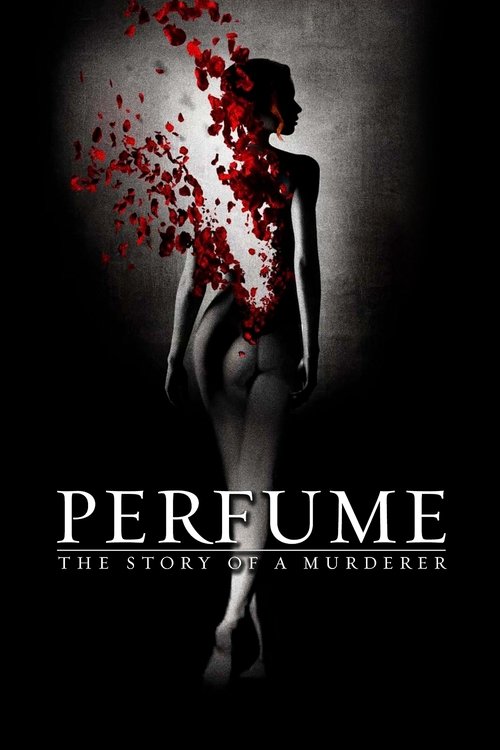
Perfume: The Story of a Murderer
Plot
Jean-Baptiste Grenouille, born in the stench of 18th century Paris, develops a superior olfactory sense, which he uses to create the world's finest perfumes. However, his work takes a dark turn as he tries to preserve scents in the search for the ultimate perfume.
Get the Weekly Woke Watchlist
New and trending movies scored for woke bias, preachy messaging, and forced political themes — before you waste your evening.
No spam. One useful email per week.
Overall Series Review
Categorical Breakdown
The main character's struggle is based entirely on his unique, supernatural olfactory genius and his lack of a personal scent, which defines him as an outcast, not on any immutable characteristic or intersectional identity group. The story concerns an individual's merit (his skill) versus his moral depravity (his crimes). The casting is historically authentic to 18th-century France, featuring only European actors for the French characters.
The film portrays 18th-century Western civilization, specifically France, as a "Crapsack World" that is disease-ridden, profoundly unequal, violent, and morally bankrupt. Paris is introduced as a place of absolute filth and stench. The powerful elite and the general public alike are shown to be morally depraved and easily manipulated, culminating in a grotesque, public, sensory-induced orgy that strips away all pretense of civility.
Female characters function primarily as victims, specifically as the objects of the male protagonist’s sociopathic obsession, whose 'scent' (soul) must be captured through murder. This dynamic centers the narrative on the male's genius and quest, and it is the antithesis of the 'Girl Boss' trope. Women are depicted as helpless, beautiful, and possessing a desirable 'essence,' but they are not agents of their own destiny. The story begins with the protagonist's own mother being executed.
The narrative is completely centered on the protagonist's homicidal obsession with the natural, heterosexual scents of young, virginal women. The climax of the film involves a mass heterosexual act induced by the ultimate perfume. No alternative sexualities are centered, and the plot contains no themes related to gender ideology or the deconstruction of the nuclear family.
The core of the film promotes moral relativism, presenting the protagonist's murders as a pursuit of artistic perfection and a search for his own 'soul,' rather than as a violation of objective moral law. The ultimate perfume is so powerful it makes the crowd believe the serial killer is an 'angel sent by the Lord God,' overriding their faith, law, and morality with a purely sensory illusion. Traditional religion and justice are comically and catastrophically subverted by a material substance, emptying moral and spiritual institutions of all transcendent authority.
Get the Weekly Woke Watchlist
New and trending movies scored for woke bias, preachy messaging, and forced political themes — before you waste your evening.
No spam. One useful email per week.