American Dad!
Season 7 Analysis
Season Overview
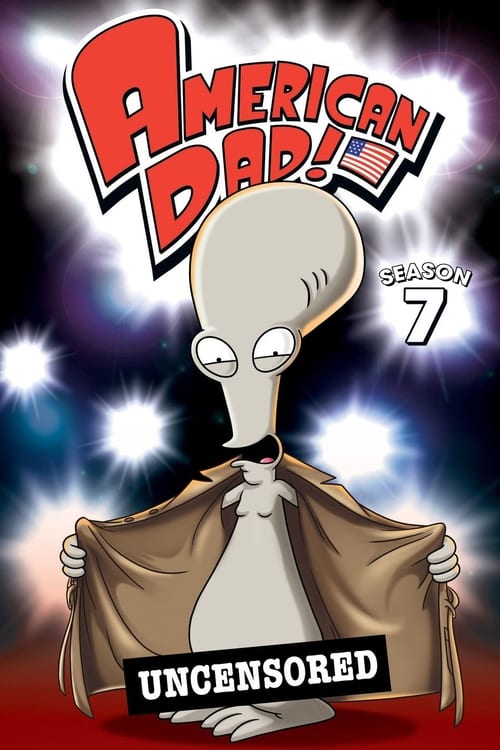
It's a time once again to let it all hang out with an all-new volume of animated outrageousness! From the disturbed comic minds of Mike Barker, Matt Weitzman, and Family Guy creator Seth MacFarlane, comes the always insane adventures of CIA operative Stan Smith and his wonderfully twisted family. In the 100th episode, Hayley elopes with Jeff! Other episodes include Stan on jury duty, Steve walking in on his amorous parents, Roger dating Steve's best friend, and yet another American Dad Christmas classic. Plus, there are serial killers, Turkish amphetamines, and evil clones! So, you know, the usual!
Season Review
Categorical Breakdown
Characters are often defined by their eccentric behavior or extreme personality flaws rather than race or immutable characteristics. Racial and cultural themes appear as punchlines, such as an episode that temporarily turns Stan into an African-American man for comedic effect, or the use of stereotypes (like a Latina street gang) for an anarchic plot device. The narrative does not dedicate itself to lecturing on privilege, systemic oppression, or the vilification of whiteness, instead using cultural and racial differences for simple, crude shock humor.
The show satirizes American institutions and Stan's hyper-patriotism, but this is a deconstruction of Stan's character flaws, not a fundamental hostility toward the nation itself. Institutions like the CIA, family, and church are shown to be corrupted or absurd, yet the core Smith family unit remains a functional (albeit chaotic) shield against the outside world. The humor involves hostility toward Stan's traditionalism, but the show does not promote the 'Noble Savage' trope or consistently demonize American heritage; it uses it as a backdrop for surreal comedy.
Gender roles are frequently reversed or satirized as part of the comedy, such as Stan's emasculation being a running joke and Francine often being the more capable or dangerous partner, but she is not a flawless 'Girl Boss.' She is a complex, often flawed character who is also shown as a wife and mother who values her family. Motherhood is not framed as a 'prison' in the show, and while males are often bumbling, this is typical of the animated sitcom genre, not an explicit ideological vilification of masculinity.
The season features gay characters like Principal Lewis, whose marriage is a central plot point without being a lecture on sexual identity, normalizing a non-traditional pairing through character-driven comedy. Roger, a pansexual alien, frequently adopts numerous male and female personas for chaotic schemes, playing with gender and sexual fluidity for humorous purposes. Sexual identity is a source of plot and humor, not the most important trait, and the show focuses on the absurdity of a family structure that embraces a non-human alien with countless identities, which deconstructs the nuclear family through sheer absurdity rather than direct ideology.
The episode 'Season's Beatings' directly targets Christianity and religious hypocrisy, depicting Stan's faith as rigid, self-serving, and leading him to violence in his quest to kill the Antichrist. This is a common theme of Seth MacFarlane's work, but the faith is a source of plot and satire, not a root of evil. The narrative uses the absurdity of religious dogma for dark comedy and spectacle rather than a sustained, serious argument for moral relativism.