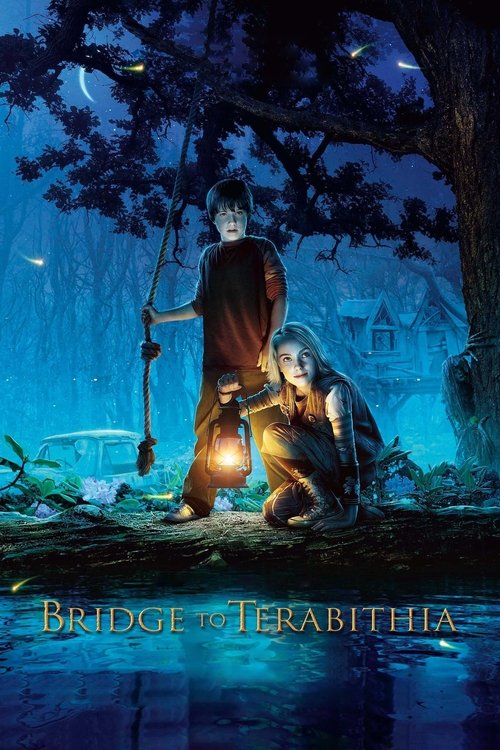
Bridge to Terabithia
Plot
Jesse Aarons trained all summer to become the fastest runner in school. So he's very upset when newcomer Leslie Burke outruns him and everyone else. Despite this and other differences including that she's rich, he's poor, she's a city girl, and he's a country boy the two become fast friends. Together they create Terabithia, a land of monsters, trolls, ogres, and giants where they rule as king and queen.
Get the Weekly Woke Watchlist
New and trending movies scored for woke bias, preachy messaging, and forced political themes — before you waste your evening.
No spam. One useful email per week.
Overall Series Review
Categorical Breakdown
The narrative's core conflict rests on universal themes of being an outcast, dealing with bullies, and overcoming class disparity, with Jesse being from a poor family and Leslie being from a more affluent one. Characters are judged by their creative spirit and kindness, not by immutable characteristics or race. The movie does not introduce political lectures on privilege or systemic oppression, adhering to a universal meritocracy of the soul, where friendship transcends social and economic differences.
The film does not frame Western civilization or the local culture as fundamentally corrupt. It accurately portrays the real-life struggles of a rural, financially strained American family, where the father is distant and hardworking, causing the protagonist to feel ignored. The movie's resolution focuses on the male protagonist accepting his home and the local environment, culminating in a reconciliation and affirmation of the family bond, treating institutions not as sources of chaos but as a difficult reality to be navigated.
Leslie Burke is an archetypal 'Girl Boss' figure: she is instantly perfect, wins the boys' footrace, and serves as the imaginative and intellectual catalyst for Jesse's personal growth, consistently leading him to new ways of thinking. While the female character is superior in many ways and inspires the male lead, Jesse is not depicted as a bumbling idiot or toxic. He is an introverted, sensitive artist who is ultimately taught how to become a protective, creative 'King,' balancing the narrative by showing a path to a more developed masculinity rather than total emasculation.
The movie contains no themes or characters centering on alternative sexualities, deconstructing the nuclear family as an ideology, or promoting gender theory. The central relationship is an innocent, non-romantic, pre-adolescent friendship between a boy and a girl. The film is structurally normative, with the nuclear family presented as the standard, albeit one that is troubled by financial and communication issues.
The story deals directly with the existential crisis of loss, featuring scenes that confront the nature of God and religion. A key theological statement in the film challenges a traditional Christian concept of Hell, which was noted by some contemporary Christian viewers as 'anti-Christian' or feeding 'anti-religious sentiments.' The narrative's ultimate emotional and moral anchor for the protagonist is found in the transcendent power of imagination and the legacy of friendship, effectively substituting a conventional religious structure with a subjective, creative morality.
Get the Weekly Woke Watchlist
New and trending movies scored for woke bias, preachy messaging, and forced political themes — before you waste your evening.
No spam. One useful email per week.