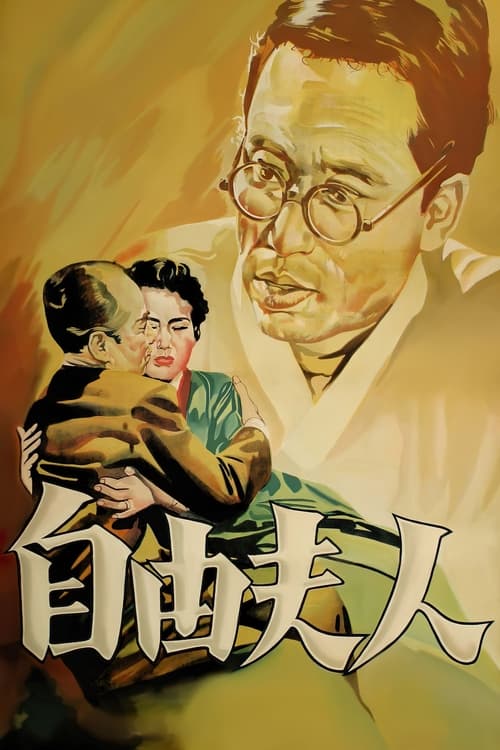
Madame Freedom
Plot
Oh starts working at a boutique to help her make a living. Professor Jang begins dating the typist Miss Park, but decides to break up with her to protect her family. Han's wife anonymously sends a letter to Jang to reveal Oh's affair.
Get the Weekly Woke Watchlist
New and trending movies scored for woke bias, preachy messaging, and forced political themes — before you waste your evening.
No spam. One useful email per week.
Overall Series Review
Categorical Breakdown
The film's focus is on class and gender conflict within a homogenous Korean society in the 1950s. The narrative does not employ an intersectional hierarchy based on immutable race characteristics. Characters are defined by their marital status, wealth, and moral choices. Casting is historically and ethnically authentic to the setting and conflict.
The film's primary conflict is the defense of traditional Korean values and family structure against the corrupting influence of *foreign* (Western/American) materialism and decadence, such as jazz music, dance halls, and luxury goods. The narrative is explicitly a critique of adopting external cultural norms that threaten the Korean home culture, making it the opposite of civilizational self-hatred.
The core of the plot involves the protagonist rejecting the traditional role of 'obedient housewife' to pursue a career and 'freedom,' directly aligning with the 'career is the only fulfillment' trope. The central conflict is the breakdown of the nuclear family due to the wife’s insistence on a life outside the home, and her husband later criticizes her for choosing 'depravity instead of your duties as a mother,' positioning motherhood as a duty to be rejected for personal liberation. Her actions are presented as a form of sexual and financial 'freedom' that challenges male authority.
The narrative focuses exclusively on heterosexual dynamics, specifically the consequences of extramarital affairs and the dissolution of a traditional male-female marriage. There is no content relating to alternative sexualities, the deconstruction of the nuclear family as an 'oppressive' structure beyond the consequences of infidelity, or gender ideology lecturing.
The movie’s moral framework is centered on traditional social and family duty, a critique of materialism, and the breakdown of order. The conflict is sociological and cultural rather than theological. There is no explicit hostility or critique directed toward an organized religion like Christianity, or any other faith, serving as the root of evil.
Get the Weekly Woke Watchlist
New and trending movies scored for woke bias, preachy messaging, and forced political themes — before you waste your evening.
No spam. One useful email per week.