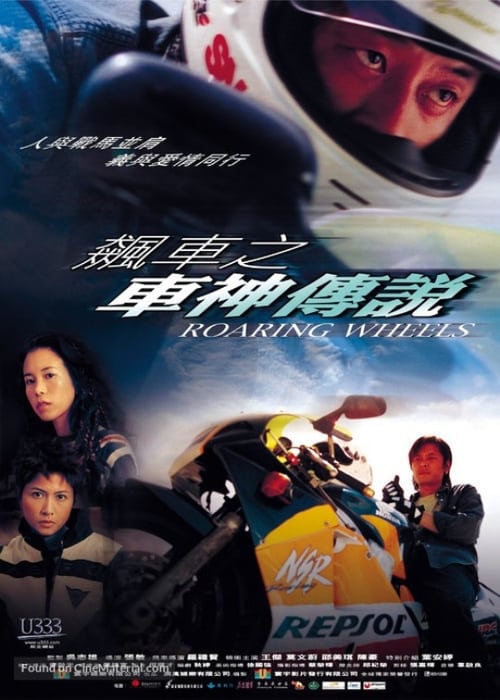
Roaring Wheels
Plot
In the underground world of motorbike racing, Wong (Wang) and Fung (Chan) are the two top drivers. Wong is number one and Fung is eaten up with jealousy. Fung, furious at always being second-best challenges him to a last race - and against his better judgement Wong goes for it! Disaster ensues - a terrible accident leaving him crippled, coupled with the death of his girlfriend. Three years later, he is a single father, raising his son in the obscurity of a seaside resort. This tranquil existence is intruded upon by Fung besotted with proving himself to be the best and a mystery girl, Suki (Mok), who seems to be in love with Wong. Fung blackmails Wong into another race. Wong now must face his past, his loss of nerve and his future.
Get the Weekly Woke Watchlist
New and trending movies scored for woke bias, preachy messaging, and forced political themes — before you waste your evening.
No spam. One useful email per week.
Overall Series Review
Categorical Breakdown
The narrative's conflict is entirely rooted in personal rivalry, skill, and loss between the two main racers, Fred Wong and Weird/Fung. Character value is determined by personal merit and ability ("Racing God" title) rather than race, class, or intersectional status. The casting is ethnically consistent with the Hong Kong setting and contains no evidence of political 'race-swapping' or lecturing on privilege.
The film is an action melodrama set in Hong Kong focusing on personal struggle within the local underground racing subculture. There is no hostility directed at the home culture, ancestors, or Western civilization, nor is there any trope framing an 'other' culture as spiritually superior. The story respects a core societal institution: the family, as the protagonist's motivation is his son and the need to overcome his past for his future.
Female characters Suki and Kelly are prominent and are credited with providing the emotional depth to the routine drama, but they primarily function as love interests or supportive friends to the male protagonist. The main male character, Fred Wong, is a dedicated single father, a portrayal that celebrates the protective and nurturing aspects of masculinity and fatherhood. There is no overt anti-male messaging, and the narrative celebrates family life over a career-only fulfillment message.
The plot centers on normative male-female relationships, specifically a man's recovery from the death of his wife and a new romantic interest. The core family structure is the traditional nuclear unit of a father raising his son. The genre and era of the film do not contain elements of centering alternative sexualities, deconstructing the nuclear family as oppressive, or promoting gender theory.
The core themes are secular, focusing on fate, personal ambition, loss, and redemption in a racing context. While the film does not actively promote faith, it does not display hostility toward religion. The moral framework is objective, where jealousy and villainy are punished, and fatherly duty and perseverance are rewarded, adhering to a transcendent moral law of good and evil.
Get the Weekly Woke Watchlist
New and trending movies scored for woke bias, preachy messaging, and forced political themes — before you waste your evening.
No spam. One useful email per week.