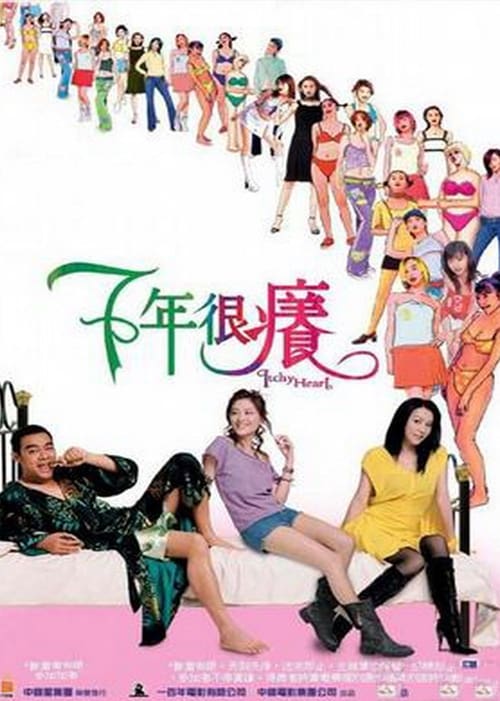
Itchy Heart
Plot
Truly reflecting Hong Kong people's attitudes of love and marriage, "Itchy Heart" tells a story of a married man who wants to look for excitement out of marriage by meeting someone new. As his wife going out for a trip, Chi-man's (Lau Ching-Wan) desires to new excitement have overwhelmed him as he meets beautiful and young Cherry (Cherry In) and his former girlfriend Bing (Carina Lau). After knowing his wife's affair, he decides to get divorced, without knowing whether he should give himself a second chance to be in love again. This is a comedy reflecting a so-real reality on marriage nowadays. With the detailed portraits of the characters' emotions, the story itself has successfully created echoes among the audience with its bitter-sweet scenario.
Get the Weekly Woke Watchlist
New and trending movies scored for woke bias, preachy messaging, and forced political themes — before you waste your evening.
No spam. One useful email per week.
Overall Series Review
Categorical Breakdown
The film is a Hong Kong production with a culturally authentic Asian cast. The entire narrative focuses on the universal themes of marriage, boredom, and infidelity. There is no content related to Western identity politics, race, intersectional hierarchy, or vilification of any specific group based on immutable characteristics.
The central conflict is a personal marital crisis—the husband's dissatisfaction with his own life and choices within his marriage. The film offers a comic and dramatic look at relationships in Hong Kong, but it does not frame the local culture or civilization as fundamentally corrupt, racist, or inferior to any external culture.
One of the key female characters, Bing, is established as a successful businesswoman and entrepreneur who holds significant financial and emotional dominance in her relationship with her younger male paramour. The narrative also shows the wife, Coco, independently taking a vacation and having her own affair, creating a moral parity in infidelity and suggesting that fulfillment may be sought outside of the marriage unit, which slightly elevates the score. The male lead is portrayed as somewhat pathetic and bumbling in his attempts to cheat.
The narrative strictly adheres to heterosexual relationship dynamics, focusing on infidelity and the breakdown of a traditional male-female pairing. There is no evidence of centering alternative sexualities, promoting gender ideology, or deconstructing the nuclear family as a political theme.
The plot is a secular romantic comedy/drama about human emotions, choice, and marital struggles. It does not engage with religion, faith, or anti-theistic ideas. The moral conflicts presented are purely personal and secular, relating to fidelity and relationship consequences.
Get the Weekly Woke Watchlist
New and trending movies scored for woke bias, preachy messaging, and forced political themes — before you waste your evening.
No spam. One useful email per week.