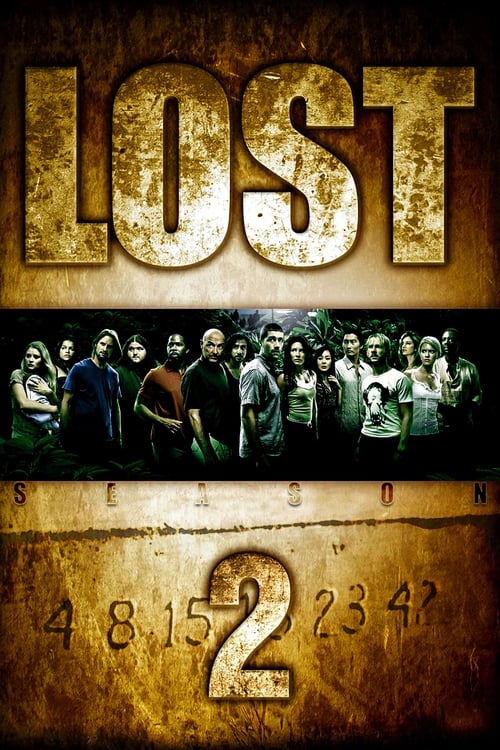
Lost
Season 2 Analysis
Season Overview
The motley crew of castaways remains stranded on the eerie deserted island populated by mysterious things that go bump in the night.
Season Review
Categorical Breakdown
The main narrative thrust and philosophical conflict centers almost entirely on the lives of Jack, Locke, and Sawyer, who are all white males. Characters of color, such as Sayid, Sun, Jin, and Michael, as well as new characters like Ana Lucia and Mr. Eko, are present and have individual episodes, but the ultimate decision-making and dramatic tension of the season are controlled by the white male core. The show does not feature any narrative about systemic oppression or privilege, nor is there any vilification of whiteness; it simply defaults to centering white male characters.
The central conflict is between the survivors—representatives of modern Western society—and the remnants of the Dharma Initiative (a failed Western scientific utopia) and the Others. The Others, who are revealed to be manipulative and violent, view themselves as the indigenous guardians protecting the Island from the 'corruption' of outside science and civilization. This creates a moral grey area that questions the utility of Western scientific-rationalist institutions, represented by the Dharma Initiative, over the Island’s mystical, less 'civilized' forces.
Female characters are not presented as immediately perfect 'Girl Boss' figures. Kate is defined by her criminal past and a complex love triangle; her primary motivations are emotional and relational. Sun’s Season 2 arc is heavily defined by her pregnancy and repairing her relationship with her husband, Jin. New female characters, Ana Lucia and Libby, are complex and flawed, not paragons of competence, and their stories are rooted in trauma and relationships. The narrative does not dismiss motherhood or traditional gender roles.
The main cast’s storylines are entirely centered on traditional, male-female pairing and sexual dynamics. There is no major or minor character in this season whose identity or personal drama is centered around alternative sexuality or gender ideology. The show adheres strictly to a normative structure without any political lecturing on sexuality.
The core thematic battle is explicitly named 'Man of Science, Man of Faith' (Jack vs. Locke). The show consistently elevates the possibility of the spiritual, mystical, and destined over Jack's secular, rationalist worldview. Mr. Eko, a man who finds his faith and becomes a spiritual leader, is a key figure. Science, represented by the Dharma Initiative and its Hatch experiment, is often framed as a failed, dangerous, and corrupted endeavor. Faith and the transcendent are clearly shown as powerful, meaningful forces in the narrative.