Lost
Season 3 Analysis
Season Overview
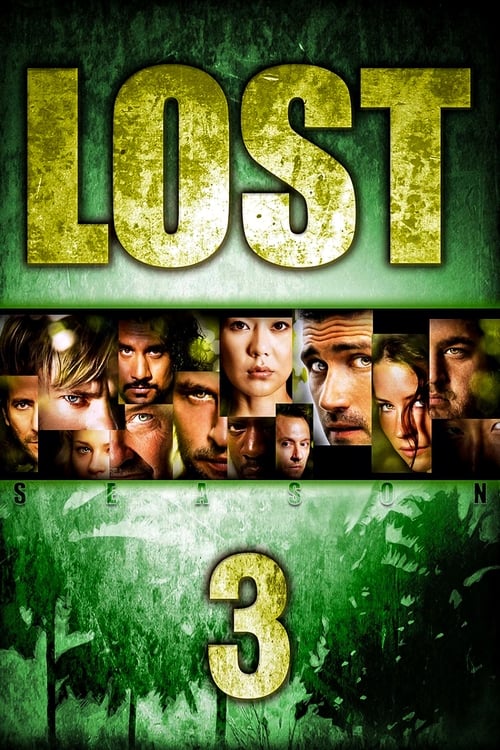
The castaways continue to seek strength as paranoia increases, prompting the revelation of more backstories -- and more secrets about the island.
Season Review
Categorical Breakdown
Characters are judged by their pre-island flaws and on-island actions, which is a universal meritocracy of soul, not immutable characteristics. The narrative focus centers overwhelmingly on the 'Lost White Males' (Jack, Locke, Sawyer) in the main leadership and philosophical conflicts. Though the ensemble is racially diverse, there is no vilification of 'whiteness.' A slightly higher score is given because some secondary characters of color (Sayid, Hurley, Jin) are occasionally framed by their backstories through cultural stereotypes (torturer, simpleton/superstitious, abusive husband), which is an issue of uncritical or reductive representation, though not overt identity politics lecturing.
The narrative frames the Island as a mysterious place that tests and redeems its inhabitants, not as a superior 'Noble Savage' alternative to Western civilization. The 'Others' are a highly organized, often ruthless cult with modern/DHARMA technology, subverting the Noble Savage trope. Flashbacks reveal that characters' lives in the West were often personally broken by greed, betrayal, and crime, but this corruption is individual, not a systemic indictment of the entire civilization. Institutions like marriage, family, and faith are presented as sources of struggle and potential strength.
Female characters are strong, independent, and vital to the plot's momentum, such as Kate's fugitive status and Juliet's critical role as a skilled fertility doctor. However, the female characters' main motivations and narrative arcs are often intertwined with men (the love triangle) or the central plot point of the Island's deadly crisis for pregnant women and newborns. Motherhood and natal issues are central to the Island's mythology, directly opposing an anti-natal message. Women are flawed, not 'perfect instantly' Mary Sues. The primary decision-making roles in the Island's mythology are dominated by men.
The season operates within a completely normative structure, with all major relationships being traditional male-female pairings. Sexual identity is not a driving force, an ideological focus, or a topic of discussion. The nuclear family is not deconstructed as an 'oppressive' concept. There is no presence of gender theory or political lecturing on alternative sexualities, placing the show at the lowest end of the scale.
The entire series, and this season in particular, is defined by the core philosophical conflict between 'Science' (Jack's disbelief) and 'Faith' (Locke's belief), which culminates in the transcendent nature of the Island and the characters' purpose. Mr. Eko’s arc in this season directly addresses themes of Christian atonement, sin, and spiritual seeking. The Island provides an objective, mystical truth and higher moral law (Jacob’s rules), which directly aligns with Transcendent Morality rather than moral relativism. Religion and spiritual belief are consistently portrayed as sources of personal strength and thematic meaning.