Lost
Season 6 Analysis
Season Overview
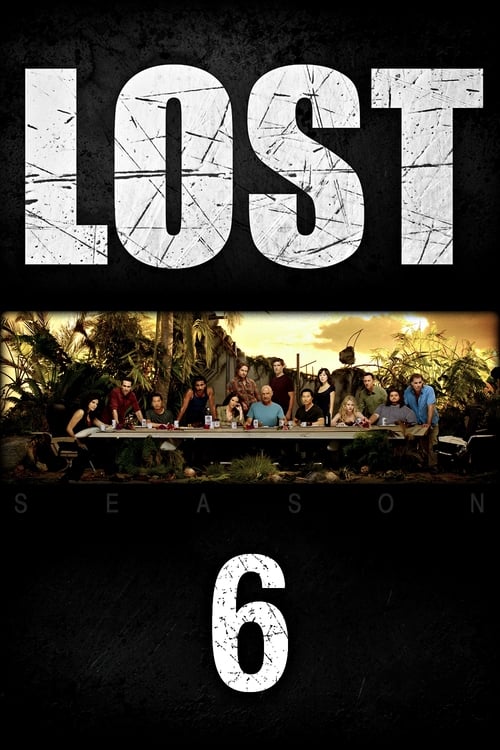
After Season 5’s explosive finish, everything is up in the air for the survivors of flight 815. No one knows what — or who — the future will hold. Will Juliet’s sacrifice to save her friends work? Can Kate choose, once and for all, between Jack and Sawyer? Will Sun and Jin be reunited? Is it too late to save Claire? Whatever awaits everyone on the island, one thing is for certain — the moment of truth has arrived.
Season Review
Categorical Breakdown
Characters of all races and genders are treated as complex, flawed individuals whose worth is measured by their moral choices and capacity for redemption. Jack Shephard, a white male, serves as the ultimate sacrificial hero of the series. Sayid, Sun, Jin, and Hurley, diverse main characters, have their arcs centered on personal tragedy and redemptive sacrifice. The narrative makes no reference to systemic oppression, intersectional hierarchy, or the vilification of any racial group. All characters are judged solely by the 'content of their soul,' not immutable characteristics.
The Island is portrayed as a unique, powerful, and sacred entity that needs protection, slightly leaning into the 'Noble Savage' trope against the 'corrupted' outside world. However, the outside world is only shown to be the source of the characters’ personal baggage and mistakes, not fundamentally corrupt or evil. The core message of the finale is the celebration of community and shared journey—a form of collective 'home'—which is the shield against chaos, not a rejection of civilizational heritage.
Female characters like Kate, Sun, and Claire are strong, active participants, yet they are also deeply flawed and defined by their personal relationships, particularly with men and children. Sun and Jin's reunion is one of the most celebrated and tragic moments, affirming traditional male-female bonding. There is no depiction of women as 'Mary Sues' or men as uniformly incompetent. Motherhood and family ties (Kate's attachment to Aaron, Sun and Jin's desire to protect their child) are central drivers for the female characters' motivations and ultimate spiritual resolution.
The series focuses entirely on traditional romantic pairings (male and female) as the core emotional bonds needed for the characters to move on in the afterlife. Sexual orientation is not a topic of discussion or a defining character trait. There is no presence of 'queer theory' or ideological messaging, and the nuclear family structure is reinforced by the central importance of finding one's partner to achieve final peace.
The final season and the series finale are a profound affirmation of transcendent morality, faith, and a higher power. The 'flash-sideways' is explicitly confirmed to be a form of purgatory/afterlife where characters' souls must reunite to move on to 'the light.' The ultimate conflict is between the embodiment of good (Jacob/faith/community) and the embodiment of nihilism/evil (The Man in Black/science without morality/solipsism). The show's ultimate thematic victory goes to faith and objective moral truth, making it the opposite of anti-theistic.