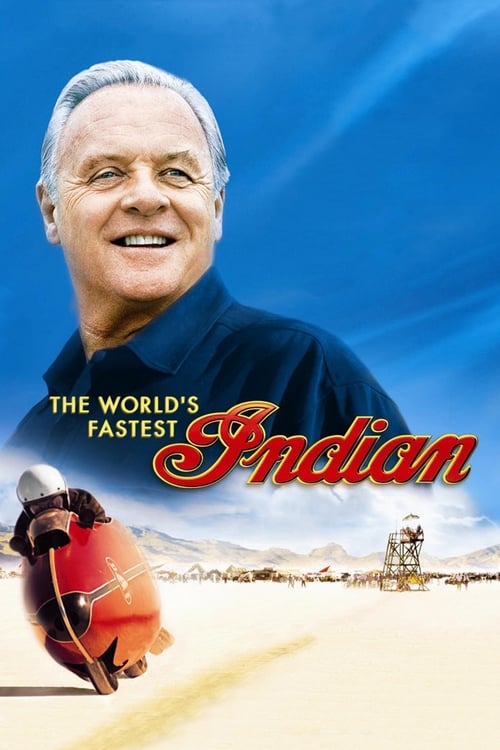
The World's Fastest Indian
Plot
The life story of New Zealander Burt Munro, who spent years building a 1920 Indian motorcycle—a bike which helped him set the land-speed world record at Utah's Bonneville Salt Flats in 1967.
Get the Weekly Woke Watchlist
New and trending movies scored for woke bias, preachy messaging, and forced political themes — before you waste your evening.
No spam. One useful email per week.
Overall Series Review
Categorical Breakdown
The story focuses entirely on Burt Munro’s individual merit, technical skill, and persistence, not on immutable characteristics or identity hierarchy. The protagonist is a white male celebrated for his engineering talent and self-reliance, not vilified. Diverse characters, including a Mexican-American used-car salesman and a Native American man, appear along the road, their primary function being to offer him help based on his character, supporting a universal meritocracy theme.
The film celebrates the protagonist’s 'Kiwi pluck' and ingenuity, showing a warm, supportive community in New Zealand that helps fund his journey. The journey to America highlights the kindness of strangers across the continent. There is no deconstruction of his Western or national heritage, and the overall tone is one of gratitude for the generosity of people and institutions (like the racing community).
The narrative is male-centric, focusing on Burt Munro and his motorcycle. The women who appear are auxiliary and supportive, such as the new girlfriend who helps with fundraising or a woman named Ada who offers her garage. There is no presence of the 'Girl Boss' trope, and the male protagonist is celebrated for his tenacious and protective masculinity. While his marital family is absent, the film’s focus on a solo, lifelong dream does not actively push an anti-natalist message.
The protagonist has an extended, positive, and non-judgmental interaction with a transvestite character named Tina in Los Angeles, who is a significant helper in his journey. The character’s non-traditional gender expression is present and accepted without conflict by the protagonist, but the issue is not the central theme of the film or the focus of a political lecture, keeping the score moderate.
The story is framed as an inspiring 'spiritual journey and the manifestation of his dreams,' emphasizing a transcendent moral truth rooted in the human spirit and the pursuit of excellence. The film is fundamentally optimistic and relies on universal values like determination and generosity. No religious figures are depicted as villains or bigots, and the morality is objective in the sense of 'follow your dream' and 'be a good man'.
Get the Weekly Woke Watchlist
New and trending movies scored for woke bias, preachy messaging, and forced political themes — before you waste your evening.
No spam. One useful email per week.