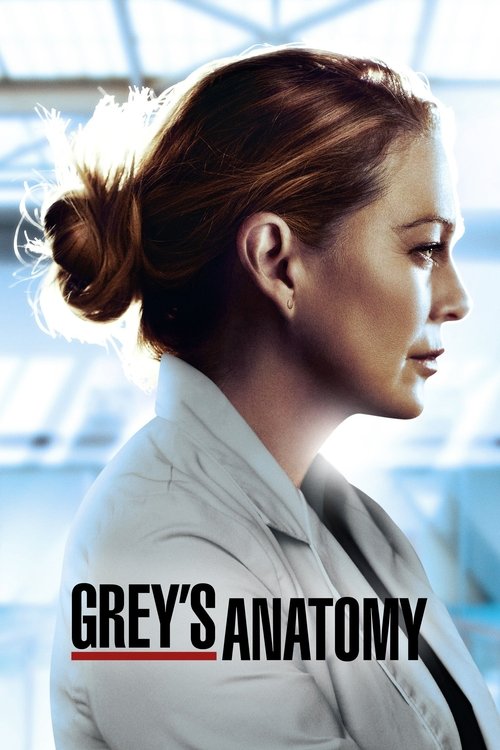
Grey's Anatomy
Season 17 Analysis
Season Overview
The COVID-19 crisis forces the doctors at Grey Sloan to face uncharted territory. The team struggles with the pandemic and personal turmoil.
Season Review
Categorical Breakdown
The plot exists to lecture on systemic oppression, privilege, and intersectional hierarchy. White male character Tom Koracick grovels and apologizes to Jackson Avery, a Black male character, simply for being a 'white male,' a direct vilification of 'whiteness' as a source of inherited guilt. Another storyline explicitly defines standard medical care as 'centered around white patients,' advocating for 'equity' over 'equality.' The narrative attributes disproportionate COVID-19 death rates to systemic racism, which characters repeatedly highlight in unprompted monologues.
The season frames American society and its institutions—specifically healthcare and wealth—as fundamentally corrupt and racist, aligning with the idea of civilizational self-hatred. Characters participate in the Seattle protests against the justice system, and the wealthy, white character Jackson Avery decides to dismantle his own family’s charitable foundation to actively fight systemic injustice. The narrative focuses on the failures of American society during the pandemic and its historical foundations.
Female characters remain in positions of unquestioned authority as 'Girl Bosses' who are rarely, if ever, wrong on moral issues. The male characters are frequently shown as morally or medically incompetent until corrected by a woman, such as Owen Hunt being corrected on the racial bias in medical practice by Miranda Bailey. Jo Wilson rejects the traditional nuclear family/relationship model in favor of pursuing a career and proposing a purely recreational, no-strings-attached sexual partnership, prioritizing career fulfillment and self-centered sexual liberation over natalism.
Alternative sexualities are a central feature of the season, maintaining the established gay male couple (Schmitt and Nico). The show includes patient storylines that actively deconstruct biological reality, such as featuring a 'gender fluid patient' with a prominent focus on pronoun enforcement and gender identity. The presence of 'gender politics' is noted as a core part of the show's 'forced' agenda, elevating sexual identity to the level of a primary moral concern and narrative tool.
While lacking a specific religious villain, the moral framework of the show is entirely secular and relativistic. Objective truth is superseded by the political and social ideology of the week, in which morality is defined solely by 'power dynamics' and 'privilege' as determined by the intersectional hierarchy. Faith and traditional religious values are absent as a source of strength or moral guidance; the show's characters and narrative serve as the singular source of moral authority.