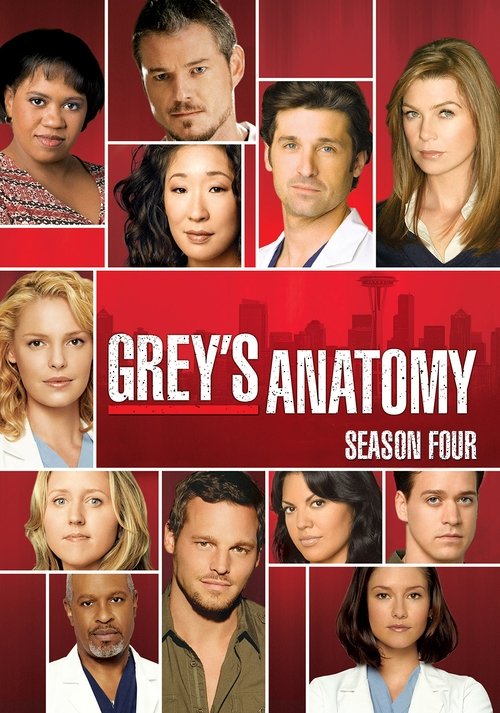
Grey's Anatomy
Season 4 Analysis
Season Overview
Enter a world of change in the irresistible and unforgettable fourth season of Grey's Anatomy. Love, lies, and family ties are revealed as the surgeons of Seattle Grace discover that their choices have major unintended consequences. And coupled with the arrival of some very eager new interns, life at the hospital sizzles with more emotion, excitement, and heartbreak than ever before.
Season Review
Categorical Breakdown
The hospital staff is highly diverse, with a Black Chief, a Black female resident, and an Asian-American resident, all holding positions of power based on professional merit. The narrative is focused on their professional competition and personal drama, not explicit political lectures on systemic oppression or 'whiteness' as a source of evil.
The plot contains no elements of civilizational self-hatred, denigration of home culture, or a 'Noble Savage' trope. The drama is contained within the hospital and the characters' personal lives.
The female leads are depicted as exceptionally ambitious and career-focused surgeons (the 'Girl Boss' archetype). The storyline of Dr. Bailey's marriage breaking up explicitly links a high-powered career with the destruction of the nuclear family, suggesting an anti-natal/anti-family message where professional fulfillment supersedes motherhood. Male characters like George are depicted as emotionally immature in relationships, while the men who are successful are often morally compromised.
The season features a significant storyline where a main character, Dr. Callie Torres, questions her sexual identity following a failed marriage and begins a same-sex relationship with Dr. Erica Hahn. This makes alternative sexuality a central, explicit theme of the season's romantic drama.
One major episode explores the theme of faith by juxtaposing it against medical science, featuring a faith healer who is also a patient. The overall voice-over narration favors the certainty of medicine over the 'mystery' of a higher power, framing science as the only thing that makes 'any kind of sense.' The episode ultimately lands on a message of moral relativism—showing up for each other 'no matter what we believe'—rather than acknowledging an objective, transcendent moral law.