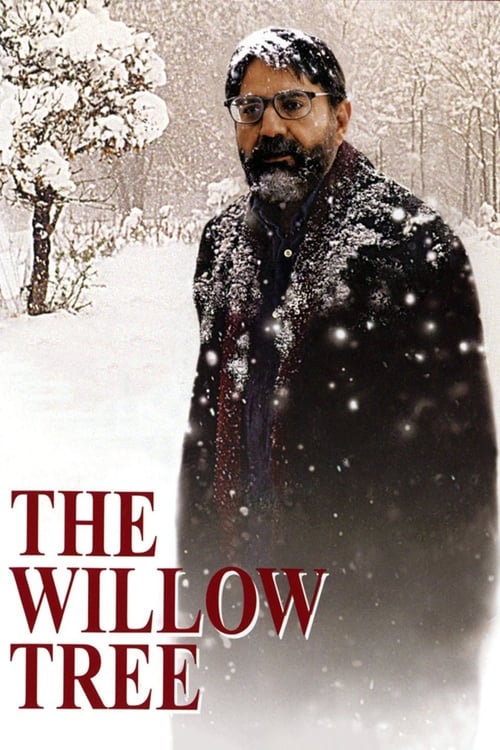
The Willow Tree
Plot
Youssef, a blind university professor, is suddenly diagnosed with a fatal disease and must undergo treatment in France. Back home, will he find the life he had before?
Get the Weekly Woke Watchlist
New and trending movies scored for woke bias, preachy messaging, and forced political themes — before you waste your evening.
No spam. One useful email per week.
Overall Series Review
Categorical Breakdown
The film is an Iranian production, and the plot focuses on a personal, moral, and spiritual conflict, not a societal one. Characters are judged by the content of their soul, specifically their capacity for gratitude and faith. The narrative does not utilize an intersectional lens, nor does it address or vilify 'whiteness' or Western-centric racial hierarchies.
The film does not engage in civilizational self-hatred. It is an Iranian story that uses Tehran as the home setting, which the protagonist betrays through his selfish, sight-induced desires upon returning from a medical procedure in Paris. The moral of the story advocates for gratitude for one's established life and home, which aligns with Chesterton's Fence. The Western location (Paris) is merely where the operation occurs, not a morally or spiritually superior culture.
The female characters, particularly the protagonist's wife Roya, are portrayed as devoted, compassionate, and moral anchors who suffer due to the male protagonist's selfishness and ingratitude. The male character, Youssef, is depicted as deeply flawed, judgmental, and cruel when he gains sight. Motherhood and the nuclear family are the 'paradise' that Youssef attempts to shatter. The narrative is anti-narcissistic and pro-complementarian values, with the female devotion highlighting the man's moral failure.
The film focuses entirely on the heterosexual relationship between the protagonist and his wife, as well as their daughter, which forms the normative structure of the story. The story's themes are deeply religious and center on the nuclear family's sanctity. There is no presence of queer theory, alternative sexual ideologies, or deconstruction of the traditional family structure; in fact, the film reinforces the traditional structure as the site of his moral testing.
The film is explicitly a 'spiritual masterpiece' that functions as an 'explicitly religious, intensely poetic meditation' on themes of faith, gratitude, transformation, and 'surrender to God' with Sufi mystical undertones. The protagonist's moral failure directly results from his ingratitude and resentment toward God, and his final arc is one of seeking forgiveness and restoring his religious faith. This strongly promotes transcendent morality and faith as a source of strength.
Get the Weekly Woke Watchlist
New and trending movies scored for woke bias, preachy messaging, and forced political themes — before you waste your evening.
No spam. One useful email per week.