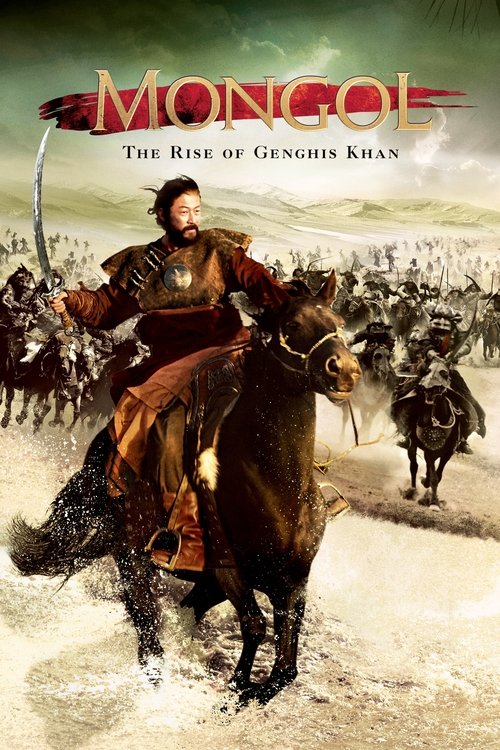
Mongol: The Rise of Genghis Khan
Plot
The story recounts the early life of Genghis Khan, a slave who went on to conquer half the world in the 11th century.
Get the Weekly Woke Watchlist
New and trending movies scored for woke bias, preachy messaging, and forced political themes — before you waste your evening.
No spam. One useful email per week.
Overall Series Review
Categorical Breakdown
The narrative focuses on Temüjin's rise from a dispossessed child to a leader, judging him purely by his merit, determination, and will to survive. The casting is predominantly Asian, with the lead being a Japanese actor playing a Mongol, which, while not strictly Mongolian, is not a 'race-swap' to a Western actor and is explained by the director as referencing a cross-cultural legend. The story does not feature the vilification of 'whiteness' as the conflict is entirely among Asian tribes and kingdoms.
The film is an epic work that celebrates the foundational history of the Mongol Empire, portraying Genghis Khan not as a monster but as an inspiring, unifying visionary. The purpose of the movie is to offer a positive re-evaluation of the Mongol culture and heritage, contrasting with more negative historical views. The narrative praises the establishment of the Yassa, a system of law, as a necessary structure that shields the society from the prior chaos of tribal custom, respecting the ultimate establishment of the nation.
The core of the emotional story is the lifelong, devoted relationship between Temüjin and his wife, Börte. Börte is portrayed as a strong, spirited, and formidable partner who repeatedly saves Temüjin's life and acts as his trusted advisor. Her strength is complementary to his leadership, and the plot heavily features their devotion, reunion, and commitment to their family, celebrating the protective male role and the vital female/motherhood role without anti-natal messaging.
The story's romantic focus is exclusively centered on the traditional male-female pairing and the establishment of the nuclear family structure through Temüjin and Börte. There is no incorporation of modern sexual or gender ideology, or deconstruction of the family unit, as the focus is on a historical, normative structure.
The film acknowledges and respects the spiritual beliefs of the Mongols, centered on Tengrism and the Eternal Blue Sky, with Temüjin frequently calling upon this faith for strength. The moral arc of the film is about Temüjin's journey to establish an objective higher law (the Yassa) to bring order and justice to a world dominated by tribal chaos, which is a quest for a transcendent moral framework. The film does not focus on or vilify Christianity or other organized religions.
Get the Weekly Woke Watchlist
New and trending movies scored for woke bias, preachy messaging, and forced political themes — before you waste your evening.
No spam. One useful email per week.