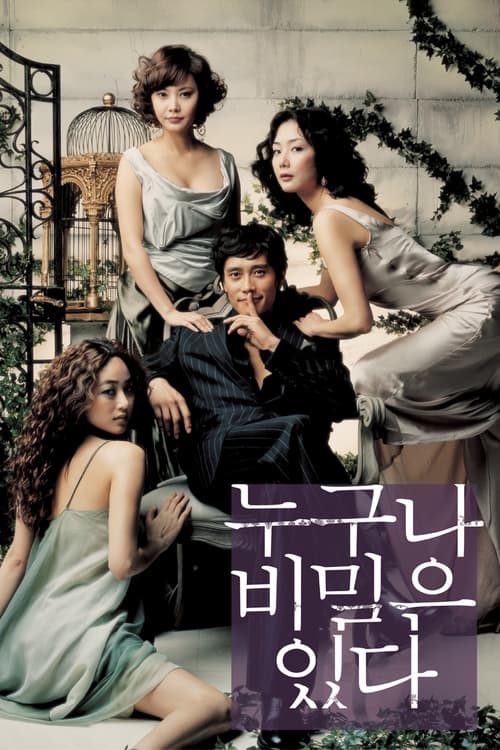
Everybody Has Secrets
Plot
Mi-young shows her boyfriend, Soo-hyun, to her two sisters. However, the sisters feel weird after the meeting, since both sisters immediately fall in love with Soo-hyun.
Get the Weekly Woke Watchlist
New and trending movies scored for woke bias, preachy messaging, and forced political themes — before you waste your evening.
No spam. One useful email per week.
Overall Series Review
Categorical Breakdown
The movie is a South Korean production and its conflict is entirely personal, revolving around four ethnically homogenous main characters. The plot does not rely on race, intersectional hierarchy, or lectures on privilege.
The film does not target South Korean core institutions (family, nation) as fundamentally corrupt; the focus is on a universal theme of infidelity and individual moral failing. It is a domestic melodrama, not a critique of the civilization itself.
The narrative gives the women a feeling of empowerment and 'self-discovery' through sexual transgression and infidelity with the male lead. This narrative arc promotes a view where traditional family structure (represented by the bored, married sister with the 'dull doctor' husband) is boring or stifling, aligning with anti-natal/anti-family messaging, though the male lead is a charming and highly competent seducer rather than a bumbling idiot.
The plot is a strictly heterosexual romantic comedy/drama focused on a man seducing three sisters. The narrative contains no elements of alternative sexual ideology, centering of queer identity, or deconstruction of the nuclear family via gender theory.
The movie explicitly embraces moral relativism, arguing that secrets and infidelity can 'fuel a loving relationship' and that the characters, in putting morality aside, are better off. This narrative message rejects the idea of Objective Truth and higher moral law in favor of subjective, consequence-free self-fulfillment.
Get the Weekly Woke Watchlist
New and trending movies scored for woke bias, preachy messaging, and forced political themes — before you waste your evening.
No spam. One useful email per week.