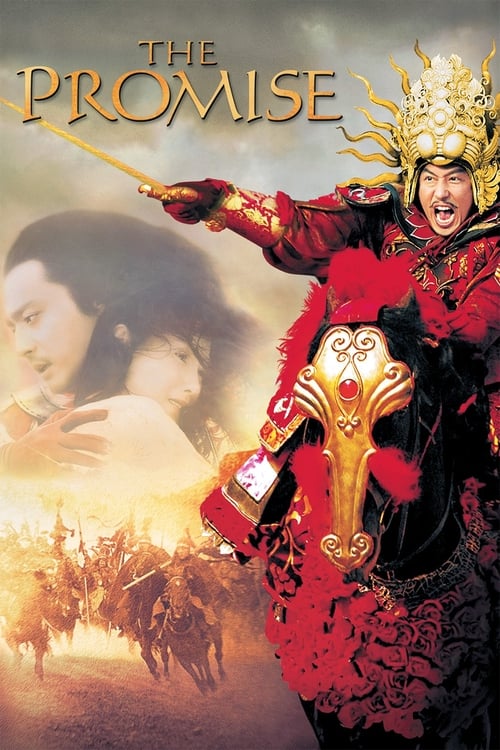
The Promise
Plot
An orphaned girl, driven by poverty at such a young age, makes a promise with an enchantress. In return for beauty and the admiration of every man, she will never be with the man she loves. This spell cannot be broken unless the impossible happens: snow falling in spring and the dead coming back to life. Now a grown and beautiful princess, she regrets her promise, for all of the men she's loved has always been met with tragedy.
Get the Weekly Woke Watchlist
New and trending movies scored for woke bias, preachy messaging, and forced political themes — before you waste your evening.
No spam. One useful email per week.
Overall Series Review
Categorical Breakdown
The film is an epic fantasy set in a non-Western cultural and historical context, featuring an entirely non-white cast. The plot is about a cursed princess, a general, and a slave, where conflict is driven by personal ambition and supernatural destiny. Character value is tied to fate, martial skill, and honor, not race or any modern intersectional hierarchy. There is no depiction or vilification of 'whiteness.'
The movie is a Chinese-produced wuxia film that draws upon a fantastical ancient setting, complete with generals, emperors, and a goddess. The focus is on a story of destiny and love within this civilization's framework. There is no hostility toward the home culture or any deconstruction of heritage; the narrative is built upon its specific cultural mythology and institutions.
The female protagonist's core conflict stems from a desperate wish for survival that results in a curse preventing her from finding enduring love. Her great beauty and status are presented as the *cause* of her suffering. Her role in the love triangle is largely as an object of affection and an emotional motivator for the three male leads. The plot does not feature a 'Girl Boss' or 'Mary Sue' character; rather, it centers on the tragic pursuit of a traditional romantic pairing.
The core of the movie is a traditional heterosexual love triangle (princess, general, slave) bound by a supernatural curse. The narrative maintains a normative structure where the quest for true, lasting, male-female romantic love is the driving emotional force. There is no presence of alternative sexualities, deconstruction of the nuclear family, or any gender ideology lecturing.
The entire plot is dependent upon a covenant made with the Goddess Manshen, a powerful supernatural entity. The spiritual realm and concepts of fate and destiny are central to the story's mechanics and philosophical theme of free will. Faith is not demonized, and the narrative acknowledges a clear, transcendent moral law (the unbreakable nature of the magical promise), which is mythological and non-Christian.
Get the Weekly Woke Watchlist
New and trending movies scored for woke bias, preachy messaging, and forced political themes — before you waste your evening.
No spam. One useful email per week.