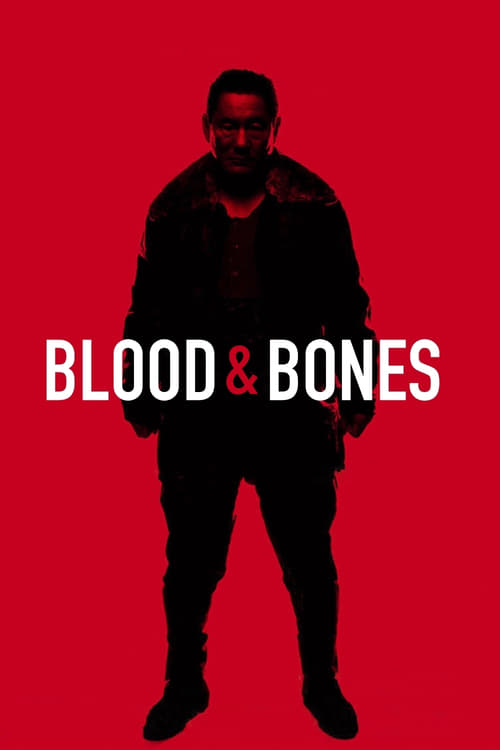
Blood and Bones
Plot
In 1923, teenager Kim Shun-Pei moves from Cheju Island, in South Korea, to Osaka, in Japan. Along the years, he becomes a cruel, greedy and violent man and builds a factory of kamaboko, processed seafood products, in his poor Korean-Japanese community exploiting his employees.
Get the Weekly Woke Watchlist
New and trending movies scored for woke bias, preachy messaging, and forced political themes — before you waste your evening.
No spam. One useful email per week.
Overall Series Review
Categorical Breakdown
The film focuses on the social reality of the Zainichi Korean community in Japan, but the narrative’s main figure is a psychopathic man who exploits his own people. The protagonist's immense cruelty and greed are the central conflict, judging him purely on the content of his soul. His minority status does not grant him a moral pass; he is depicted as a self-made tyrant within his own community, not a victim of a 'whiteness' narrative.
The film is a non-Western production set in Japan and Korea, meaning the core definition of self-hatred toward Western civilization is not applicable. It offers a critique of the historical and social environment of post-war Japan's segregation of Korean immigrants, but this is a specific East Asian geopolitical critique, not a demonization of the West or its institutions.
The core female characters, including the wife and daughters, are victims of the male protagonist’s extreme violence, abuse, and spousal rape. The dynamic is one of traditional patriarchy's destructive extreme, with women being physically and psychologically destroyed by an exceptionally toxic man. The film is the antithesis of the 'Girl Boss' or 'Mary Sue' trope, showing female vulnerability and suffering within a dysfunctional family structure.
The movie follows a decades-long chronicle of a man, his wives, mistresses, and legitimate and illegitimate children. The entire narrative structure centers on traditional male-female pairing and a nuclear family unit, albeit an extremely violent and broken one. There is no presence of alternative sexual ideologies, gender theory, or deconstruction of the male-female family as a political concept.
The movie is a stark, brutal portrait of a man's unrepentant and lifelong cruelty. The moral framework is clearly set to condemn the protagonist’s evil behavior as objectively monstrous, suggesting a transcendent moral law by which he is judged. The narrative does not contain any hostility toward religion or lectures on moral relativism; the central theme is the nature of absolute, personal evil.
Get the Weekly Woke Watchlist
New and trending movies scored for woke bias, preachy messaging, and forced political themes — before you waste your evening.
No spam. One useful email per week.