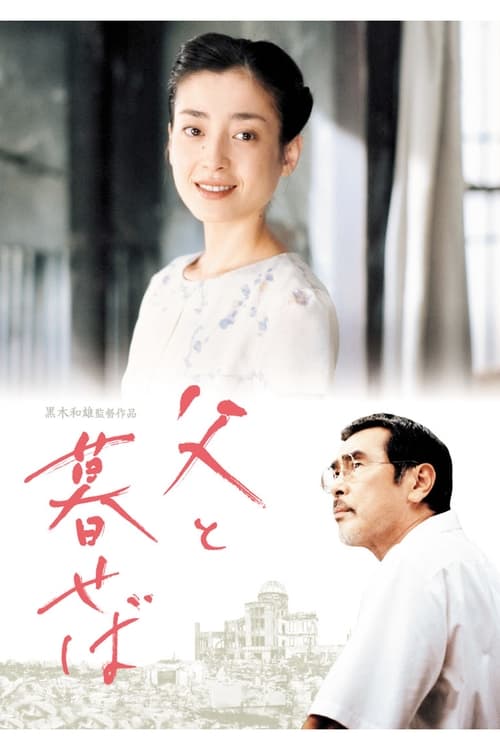
The Face of Jizo
Plot
Based on a play by Hisashi Inoue, it focuses on the sufferings of the survivors of Hiroshima. The film takes place during 4 days in the summer of 1948, as the ghost of her father visits Mitsué (Rié Miyama). He had somehow learned that she has fallen in love, and tries to convince her to start her new life. But Mitsué obstinately refuses his warm and humorous encouragements : « People were killed in my place. I do not have the right to find happiness », she says.
Get the Weekly Woke Watchlist
New and trending movies scored for woke bias, preachy messaging, and forced political themes — before you waste your evening.
No spam. One useful email per week.
Overall Series Review
Categorical Breakdown
The narrative is centered on a specific Japanese national trauma (the hibakusha experience in Hiroshima) and the universal human theme of survivor's guilt, which is a moral and personal conflict. The core drama is not based on race, class, or intersectional power dynamics, but on the content of the character’s soul. The casting is entirely Japanese and historically authentic to the 1948 setting.
The film functions as a story of recovery and affirmation for a traumatized nation. The father's ghost, Takezo, actively encourages his daughter, Mitsue, to rebuild her life in their home city and ensure the continuation of their family line, which is a powerful statement of civilizational vitality and resilience. The film respects the sacrifices of the past by honoring the dead while encouraging the living to look forward.
The female protagonist, Mitsue, is a deep and complex character whose struggle is solely against her own trauma-induced guilt, not against a male-dominated society or for a 'girl boss' career fulfillment. The loving ghost of her father encourages her to pursue a new male suitor and explicitly asks her to 'give him someone who will understand: a grandchild or a great grandchild,' which is a direct and positive celebration of natalism and the continuation of the family unit. The male figures are protective and encouraging.
The core relationship conflict revolves entirely around a normative male-female pairing (Mitsue and Masa) and the father's desire for his daughter to marry and have children. The narrative centers the traditional nuclear family as the desired future state, a shield against the chaos of war. There is no presence of alternative sexual ideologies, deconstruction of the family, or gender theory.
The film's title refers to Jizo, a Buddhist guardian of children and travelers, and the ghost of the father is presented as a spiritual, transcendent force of unconditional love and moral encouragement. This supernatural presence guides the protagonist toward life and hope, portraying faith and the spiritual world as a source of strength and objective moral duty (to live and be happy), directly opposing the concept of a spiritual vacuum or anti-theist sentiment.
Get the Weekly Woke Watchlist
New and trending movies scored for woke bias, preachy messaging, and forced political themes — before you waste your evening.
No spam. One useful email per week.