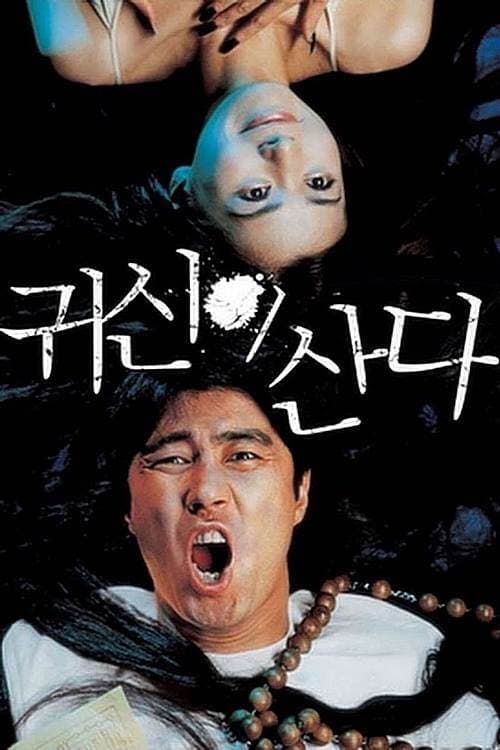
Ghost House
Plot
The day that Pil-gi waited for so many years has finally come: hes getting his own house, the last wish of his deceased father. And what a perfect house it is! Big, beautiful, isolated, next to the ocean and at that price, Pil-gi couldn't have found a better place.
Get the Weekly Woke Watchlist
New and trending movies scored for woke bias, preachy messaging, and forced political themes — before you waste your evening.
No spam. One useful email per week.
Overall Series Review
Categorical Breakdown
The movie is a South Korean production set in Korea with Korean characters, making the lens of 'vilification of whiteness' and 'race-swapping' irrelevant. The central conflict is over property ownership and personal aspiration, emphasizing the merit and determination of the protagonist Pil-gi. Character judgment is based on individual action and comedic effect.
The protagonist's main goal is to acquire and defend his home, which is explicitly tied to fulfilling the last wish of his father, directly celebrating family and the desire for generational stability. The house is a shield against chaos (financial instability) and a goal of aspiration. The film does not frame its home culture as fundamentally corrupt, though it features a critique of capitalistic greed through a developer character.
The primary antagonist, Yeon-hwa, is a female ghost who is aggressive and determined to expel the male lead from the house. While she is a dominant female character, her portrayal is as the obstacle to the protagonist's traditional, family-oriented goal, not as a 'Girl Boss' figure whose perfection is celebrated by the narrative. Masculinity in the lead is expressed through persistence and protective spirit over his property.
The plot contains no discernible themes or subplots relating to alternative sexualities, gender ideology, or the deconstruction of the nuclear family. The core dramatic drive is the traditional male-female conflict over a property and a son honoring his father's legacy.
The central conflict involves a literal ghost and the protagonist attempts exorcism rituals, directly acknowledging the reality of the spiritual realm and non-materialistic beliefs. There is no hostility toward traditional religion, Christianity, or any push for explicit moral relativism. The film's spiritual elements are integrated with local supernatural folklore.
Get the Weekly Woke Watchlist
New and trending movies scored for woke bias, preachy messaging, and forced political themes — before you waste your evening.
No spam. One useful email per week.