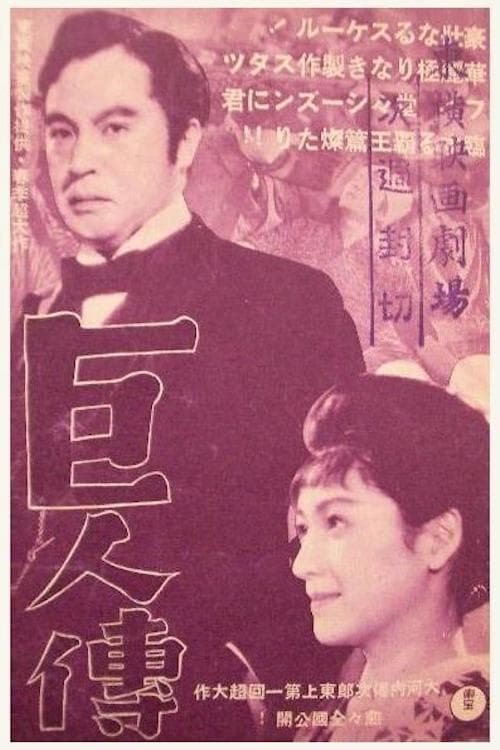
The Giant
Plot
Japanese adaptation of LES MISERABLES. The last film of director Itami took inspiration from Les Miserables. Transpiring during the Southwestern War of 1877 in Japan, which was the last civil war in the country, a criminal escapes prison only to be found by a monk. The criminal decides to turn a new leaf based on their conversation and goes on to become a town's mayor. He hears news of a mistaken arrest and identity. The revelation of truth is the start of a series of miseries.
Get the Weekly Woke Watchlist
New and trending movies scored for woke bias, preachy messaging, and forced political themes — before you waste your evening.
No spam. One useful email per week.
Overall Series Review
Categorical Breakdown
The narrative's central conflict revolves around the moral choice of a man and the failures of the legal system, focusing on character and universal justice over any immutable group characteristics. The Japanese cast in a Japanese historical setting makes any modern notion of 'race-swapping' or 'vilification of whiteness' entirely irrelevant. Characters are defined by their merit, poverty, or moral actions.
The film adapts a Western novel to a Japanese historical setting (the Meiji-era Satsuma Rebellion), which is a cultural domestication rather than an act of civilizational self-hatred. It carries an anti-authoritarian sentiment, criticizing a harsh, militaristic governing system of its era, which is a critique of a specific regime or legal institution, not a wholesale demonization of the nation, culture, or ancestors.
The female characters, modeled on Fantine and Cosette, are defined by their motherhood, sacrifice, and the need for protection and paternal guidance. The central female figure is a child and later a young woman, and the male protagonist's arc celebrates protective masculinity and the formation of a nurturing, if unconventional, family. The 'Girl Boss' or anti-natalist tropes are non-existent.
As a 1938 historical drama, the film centers on a convict's redemption and the traditional family unit formed by the protagonist and his adopted daughter. The narrative contains no elements of modern sexual or gender ideology, centering instead on normative structure and privacy of sexuality.
The protagonist's moral transformation from criminal to righteous mayor is directly catalyzed by the mercy and kindness of a monk or priest figure. This spiritual encounter is presented as the moment of transcendent moral conversion, framing faith and moral law as a positive source of strength and redemption, which directly opposes the notion of anti-theism.
Get the Weekly Woke Watchlist
New and trending movies scored for woke bias, preachy messaging, and forced political themes — before you waste your evening.
No spam. One useful email per week.