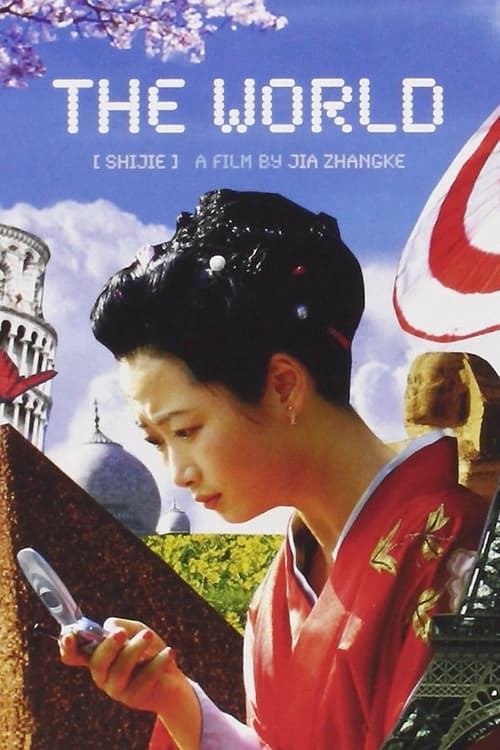
The World
Plot
At Beijing World Park, a bizarre cross-pollination of Las Vegas and Epcot Center where visitors can interact with famous international monuments without ever leaving the city’s suburbs, a security guard betrays his dancer girlfriend by pursuing another woman.
Get the Weekly Woke Watchlist
New and trending movies scored for woke bias, preachy messaging, and forced political themes — before you waste your evening.
No spam. One useful email per week.
Overall Series Review
Categorical Breakdown
The narrative’s critical lens focuses almost exclusively on class disparity and the plight of internal Chinese migrants from the provinces like Shanxi who are exploited by urban modernization. Character conflict arises from personal failings, economic desperation, and social stratification, not from a framework of intersectional identity hierarchy. The film does not feature a vilification of 'whiteness' or forced diversity, as the cast is appropriately indigenous to the setting and the core struggle is purely domestic and economic.
The movie criticizes the contemporary Chinese culture that privileges Western global consumerism and material progress over its own traditions, exemplified by the theme park being a collection of foreign architectural copies. This demonstrates hostility toward the direction of the modern 'home culture' as fundamentally hollow and materialistic, but this critique is directed at the effects of globalization and economic reform on the Chinese spirit, not a wholesale demonization of Chinese historical heritage itself. The West is portrayed as an empty symbol of desire, not a 'Noble Savage' or spiritually superior culture.
Female characters, such as the dancer Tao and the Russian performer Anna, are depicted as economically vulnerable and reliant on men for status or stability. Anna is implied to engage in sex work due to financial necessity, and Tao is shown to seek marriage as a way to escape her economic disillusionment. The women are victims of a harsh, patriarchal-capitalist environment, which is the inverse of the empowered, instantly perfect 'Girl Boss' trope. The narrative observes female suffering and traditional reliance rather than championing anti-natalism or emasculating males as a central theme.
The story centers on the strained, unfaithful heterosexual relationship between Tao and Taisheng. There is no evidence of the narrative centering alternative sexualities, deconstructing the nuclear family as an inherently 'oppressive' construct, or lecturing on gender ideology. The standard structure is the heteronormative pairing, with the drama stemming from the failure of that structure due to traditional issues like infidelity and class-driven desperation.
The core thematic concern is a social and spiritual vacuum resulting from hyper-materialism and alienation. Characters struggle with existential despair and moral relativism in a godless 'new world' of commerce, but the film does not contain explicit scenes or dialogue actively attacking or vilifying organized religion, especially Christianity, which is outside its immediate cultural focus. The lack of a higher moral law is presented as a consequence of societal conditions rather than an anti-theist manifesto.
Get the Weekly Woke Watchlist
New and trending movies scored for woke bias, preachy messaging, and forced political themes — before you waste your evening.
No spam. One useful email per week.