Doctor Who
Season 12 Analysis
Season Overview
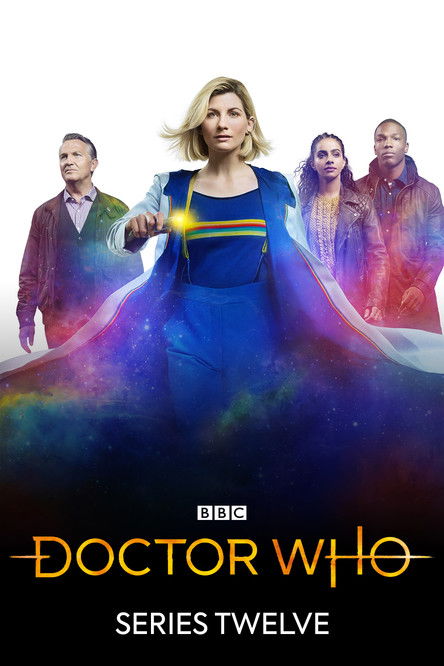
The series follows the Thirteenth Doctor and her companions as they meet a new incarnation of the Master, and his destruction of Gallifrey, the return of Jack Harkness, the appearance of an unknown incarnation of the Doctor, the Cybermen, and the secret of the "Timeless Child". Jodie Whittaker returns for her second series as the Thirteenth Doctor. It also stars Bradley Walsh, Tosin Cole and Mandip Gill as the Doctor's travelling companions, playing Graham O'Brien, Ryan Sinclair and Yasmin Khan, respectively.
Season Review
Categorical Breakdown
The core cast consists of a female lead, a black male companion (Ryan Sinclair), an Asian female companion (Yasmin Khan), and an older white male companion (Graham O'Brien). Companion characters, particularly the non-white members, are often utilized to ground stories that focus explicitly on issues of race and identity, such as past episodes in this era focusing on segregation and privilege. The narrative frames social issues with a clear, activist-style moral lens, foregrounding immutable characteristics over universal character struggle. The casting of Sacha Dhawan, an actor of South Asian descent, as the Master also continues the pattern of identity-conscious casting for major roles.
The episode 'Orphan 55' features a blatant plot where a future version of Earth is a desolate, poisoned wasteland destroyed by war and climate change, with the surviving creatures being mutated humans (The Dregs). The narrative explicitly blames modern human society for this outcome, ending with the Doctor delivering a heavy-handed, preachy monologue directly to her companions (and the audience) about how humanity must stop being passive and save itself. This sermonizing and condemnation of human civilization's trajectory scores very high on civilizational self-hatred.
The core of the show is the Thirteenth Doctor, the first female incarnation of the lead. While her character is sometimes written with traditionally 'nurturing' and 'soft-spoken' traits, the supporting male companions (Graham and Ryan) are generally sidelined and given little agency, often serving as bumbling sidekicks who are incapable of solving major problems without the Doctor's guidance. The female lead is positioned as the sole fount of knowledge and competence, fulfilling the 'Girl Boss' dynamic through the emasculation and incompetence of the men around her.
LGBTQ+ content is present but does not become the explicit center of the season's core arc. One episode features a same-sex couple (Jake and Adam) in a prominent subplot who are depicted in a normative, positive light. The underlying context of the Doctor's gender-flipping regeneration (established in earlier seasons) serves as a standing endorsement of gender fluidity in the franchise's lore, but the season avoids overt lectures or plots centered on gender ideology for children.
There are no major storylines or characters that focus on the vilification of traditional religion, specifically Christianity, in this season. However, the consistent replacement of nuanced moral exploration with a subjective, politically driven 'higher moral law' (e.g., in the environmental and social justice episodes) establishes a spiritual vacuum. The Doctor's 'sermons' act as the definitive moral authority, supplanting traditional ethical or religious frameworks with a progressive ideology.