Doctor Who
Season 9 Analysis
Season Overview
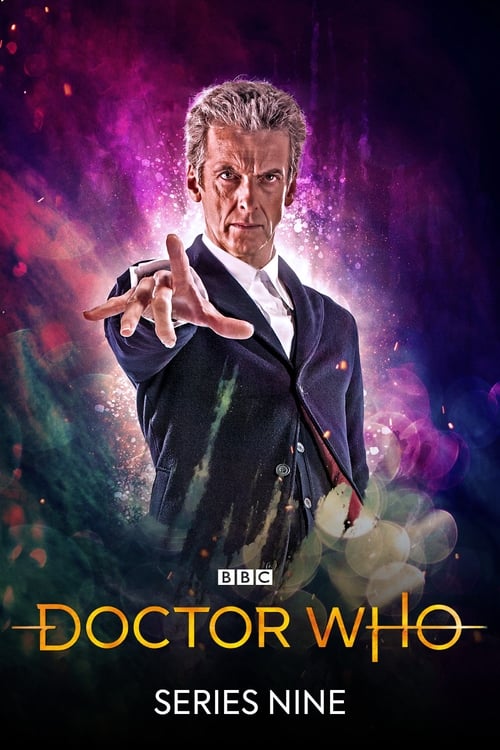
Now that the Doctor and Clara have established a dynamic as a partnership of equals, they’re relishing the fun and thrills that all of space and time has to offer. Tangling with ghosts, Vikings and the ultimate evil of the Daleks, they embark on their biggest adventures yet. Missy is back to plague the Doctor once more, the Zygons inspire fear as they shape-shift into human clones, and a new arrival moves in cosmic ways.
Season Review
Categorical Breakdown
The two-part Zygon storyline serves as an overt, unsubtle allegory for the refugee crisis and domestic extremism, directly addressing real-world politics. The narrative focuses on the marginalization of an alien group (Zygons) forced to assimilate and the human side's paternalistic approach to co-existence. The climax features a long speech about the endless cycle of violence and the necessity of peace, which is a political statement presented as universal truth.
The Zygon storyline is a critique of a national government (represented by UNIT) and its secret, unsustainable management of an immigrant population, but the narrative does not frame the home culture as fundamentally corrupt or evil. It critiques the system and the fear of the 'other,' but the Doctor’s final solution demands compromise from both sides, preventing a score of total civilizational self-hatred. It critiques the institutions, not the ancestors.
Clara Oswald's character arc is defined by her increasing recklessness and agency, becoming an equal to the Doctor and openly enjoying the dangerous life of a Time Lord. Her final storyline sees her definitively reject her fate and pre-ordained death. She obtains a stolen TARDIS, gains immortality, and partners with another immortal female character, Ashildr (Me), making her a 'Girl Boss' who successfully surpasses the limitations of a human companion and the Doctor's authority.
The presence of overt queer content is minimal but existent. The Doctor's companion, Clara Oswald, casually mentions in a classroom that Jane Austen was 'a phenomenal kisser,' a minor, non-plot-relevant line that serves as low-key acknowledgement. Her ultimate pairing with the immortal Me is an ambiguous, non-traditional 'found family' partnership of two women traveling the universe in a stolen TARDIS, which deconstructs the normative male-female pairing.
The season reinforces the Doctor's persona as the ultimate rationalist, consistently demystifying supernatural threats with science. Episodes dealing with ghosts or Vikings show the dangers of superstition and blind faith. The long-running theme of religion being a source of fanaticism and control (The Daleks, The Silence) is maintained, firmly positioning the show in a scientific humanist worldview that rejects transcendent moral law in favor of the Doctor's subjective, compassionate morality.