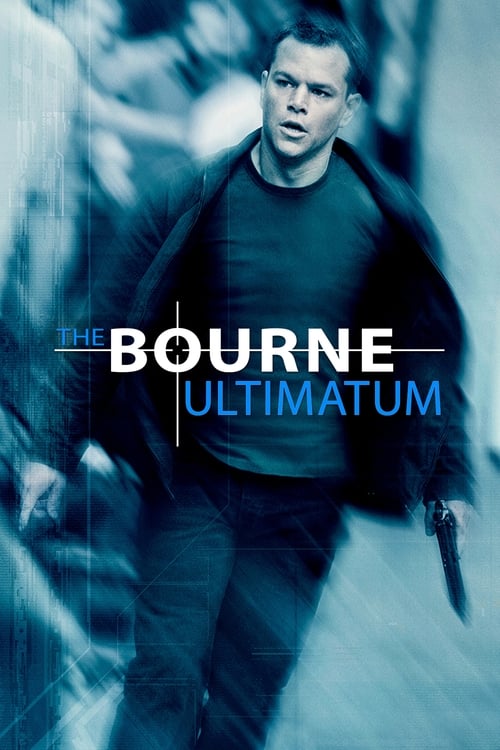
The Bourne Ultimatum
Plot
Bourne is brought out of hiding once again by reporter Simon Ross who is trying to unveil Operation Blackbriar, an upgrade to Project Treadstone, in a series of newspaper columns. Information from the reporter stirs a new set of memories, and Bourne must finally uncover his dark past while dodging The Company's best efforts to eradicate him.
Get the Weekly Woke Watchlist
New and trending movies scored for woke bias, preachy messaging, and forced political themes — before you waste your evening.
No spam. One useful email per week.
Overall Series Review
Categorical Breakdown
The narrative is entirely centered on character merit and moral choice. Bourne's entire motivation is to uncover his past actions and gain redemption, which is a universal struggle of conscience, not a lens of identity politics. Characters are judged solely by their complicity with or resistance to the corrupt intelligence program Blackbriar. There is no focus on race or intersectional characteristics as a factor in the plot or character relationships, and no vilification of 'whiteness' as an ideology, only of corrupt officials and murderers.
The film features a profound and sustained hostility toward the core institutions of one's own nation. The primary conflict is between the hero and a murderous, illegal black-ops program run by high-ranking officials within the United States' main intelligence agency. This registers as a severe critique of the government, framing a powerful, unchecked segment of the 'home culture' as fundamentally corrupt and a threat to democracy. However, the eventual exposure of the conspiracy is led by a morally upright Deputy Director within the same agency, preventing the score from reaching the highest level of absolute civilizational self-hatred.
Gender roles are largely traditional, although the film features a high-ranking female character, Pam Landy, who serves as a competent and morally authoritative Deputy Director who ultimately exposes the corruption. This grants her significant power and competence in the bureaucratic and ethical sphere. The other main female operative, Nicky Parsons, is generally shown to be dependent on Bourne for protection in action sequences. Men and women occupy distinct, complementary roles of administrative/moral authority versus on-the-ground action, and there is no overt 'Girl Boss' trope, anti-natalism, or explicit emasculation of the hero, whose masculinity is protective and highly effective.
The film's focus is entirely on espionage, action, and a man's quest to recover his memory and moral standing. There is no presence of sexual ideology or centering of alternative sexualities. The plot does not discuss or deconstruct the nuclear family structure, nor does it address gender ideology. The structure is normative, focusing on professional and moral conflicts.
The core of the movie revolves around the objective moral choices of good and evil, truth and lies, guilt and redemption. The antagonist's actions (murder, conspiracy, abuse of power) are presented as unequivocally evil. The hero's journey is one of moral reckoning. Traditional religion is not featured in the plot, nor is it vilified. Morality is transcendent: right and wrong are clearly defined and the pursuit of justice is paramount, which aligns with a low score for anti-theism or moral relativism.
Get the Weekly Woke Watchlist
New and trending movies scored for woke bias, preachy messaging, and forced political themes — before you waste your evening.
No spam. One useful email per week.