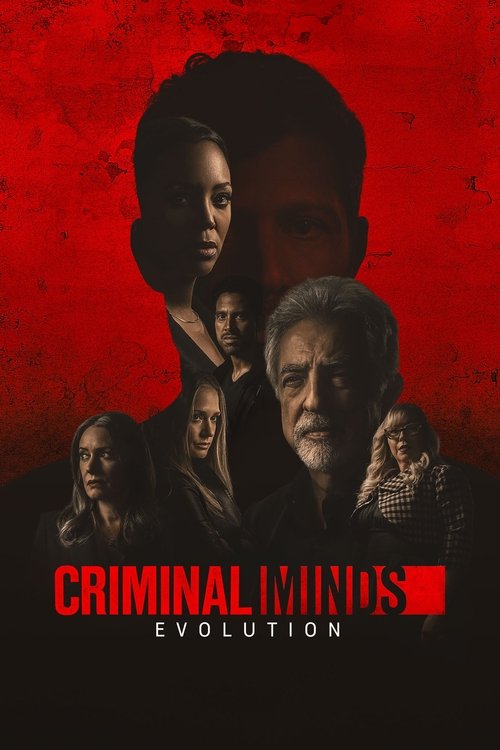
Criminal Minds
Season 16 Analysis
Season Overview
The FBI's elite team of criminal profilers come up against their greatest threat yet, an UnSub who has used the pandemic to build a network of other serial killers. As the world opens back up and the network goes operational, the team must hunt them down, one murder at a time.
Season Review
Categorical Breakdown
The narrative centers social commentary and identity-based themes explicitly, a new direction for the show. The story presents social issues using a 'far-left lens,' incorporating 'DEI, BLM, identity politics' as prominent background elements to the BAU's work. The show directly frames the concept of privilege as a factor determining the degree to which individuals must 'confront that trauma.' The unsubs (unknown subjects) are frequently depicted as 'conservative stereotypes,' including 'militia types' and those who hold traditional views, linking specific political or cultural affiliations to innate villainy.
The season's antagonists are systematically portrayed using stereotypes of traditionalist Americans, such as 'patriots' and 'militia types,' suggesting a fundamentally corrupt nature within certain sectors of the home culture. The consistent depiction of individuals who love America or hold traditional values as 'automatically the bad guy' frames a hostility toward a segment of Western-American civilization. The villain's network is an explicitly American creation, born from a period of national distress, and their ideology is often a twisted reflection of American right-wing talking points.
The team's internal power structure is explicitly female-dominated, with Prentiss running the team, supported by JJ, Tara Lewis, and Garcia, while the primary remaining strong male lead, Rossi, is depicted as emotionally compromised, grief-stricken, and prone to poor judgment. The series introduces marital difficulties for one of the primary heterosexual pairings, challenging the stability of that nuclear unit. A critique is leveled that the writing diminishes the remaining male character's complexity, leaving only the 'elderly Rossi' after a masculine lead was written out for non-plot-related reasons, suggesting a conscious rebalancing of gender power dynamics.
The season deliberately introduces a canonical lesbian relationship for a core, long-running character, Dr. Tara Lewis, who is shown dating Rebecca Wilson, a friend from the Department of Justice. The reveal is handled with immediate, casual acceptance and support from the entire BAU team, centering alternative sexuality as a normalized and celebrated part of a hero's life. The introduction of the relationship serves an obvious 'real-world representation' function to correct a perceived lack of queer representation in the show's 17-year history.
The core philosophy presented for understanding the series' monsters shifts away from universal human evil to a framework based on 'privilege' and 'trauma.' This subjective, power-dynamics-based explanation for morality replaces any transcendent moral law. The choice to cast 'conservative stereotypes' as villains, who often subscribe to traditional morality and religion, links faith-adjacent or traditionalist beliefs with criminality, implicitly framing them as the root of the problem.