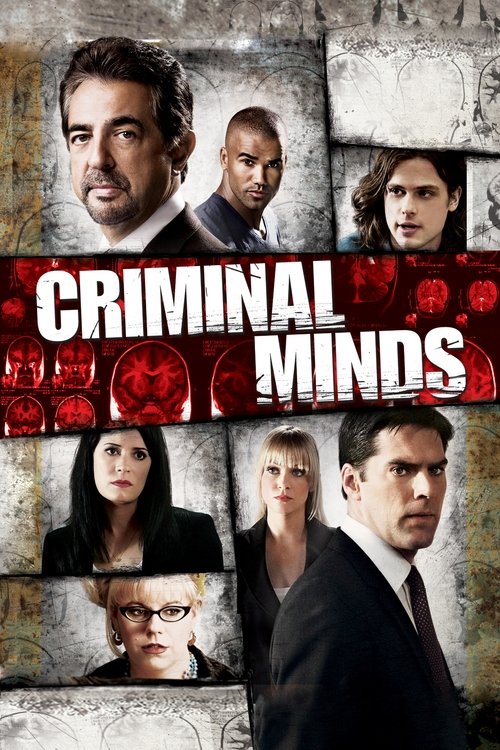
Criminal Minds
Season 5 Analysis
Season Overview
No specific overview for this season.
Season Review
Categorical Breakdown
A case targeting illegal immigrants is featured, which briefly centers the topic of an 'othered' group as victims, but the killer's motive is profiled as a specific psychosis related to border-vigilantism, not a systemic indictment of American society. The main cast is racially diverse without the narrative ever stopping to lecture on privilege or intersectional hierarchy. Characters are judged solely by their competence as profilers.
The central team, the Behavioral Analysis Unit, is part of the FBI, a federal law enforcement organization that acts as a shield against chaos across the nation. There is a deeply ingrained respect for American institutions and the justice system, viewing it as a force for good. There is no narrative component that frames the home culture or Western civilization as fundamentally corrupt or racist.
Female agents like Prentiss, JJ, and Garcia are highly intelligent, competent professionals who lead cases based on their specialized skills. This reflects a 'competent professional' model, which is a step toward the 'Girl Boss' trope but is earned on merit and is non-emasculating. The most emotional arc involves a male lead (Hotch) in a protective, paternal role who is shown to be the necessary masculine force to confront and destroy pure evil.
The sexual dynamics are normative and private, focusing primarily on the traditional nuclear family structures of the main characters (Hotch's son/wife, JJ's partner/child). There is no presence of 'queer theory' ideology, centering of alternative sexualities, or deconstruction of the male-female pair. Sexuality and gender identity are not a part of the narrative or a factor in character definition.
The show is largely secular, focusing on psychology and criminology rather than faith. Religion is not a source of strength, but traditional religion is also not depicted as the root of evil. Killers' motives often involve personal trauma, not religious scripture. The morality is objective: the actions of the 'Unsubs' (killers) are objectively evil, and the BAU pursues an objective moral law of justice, placing the score slightly higher than 1 due to the lack of transcendent morality as a clear theme.